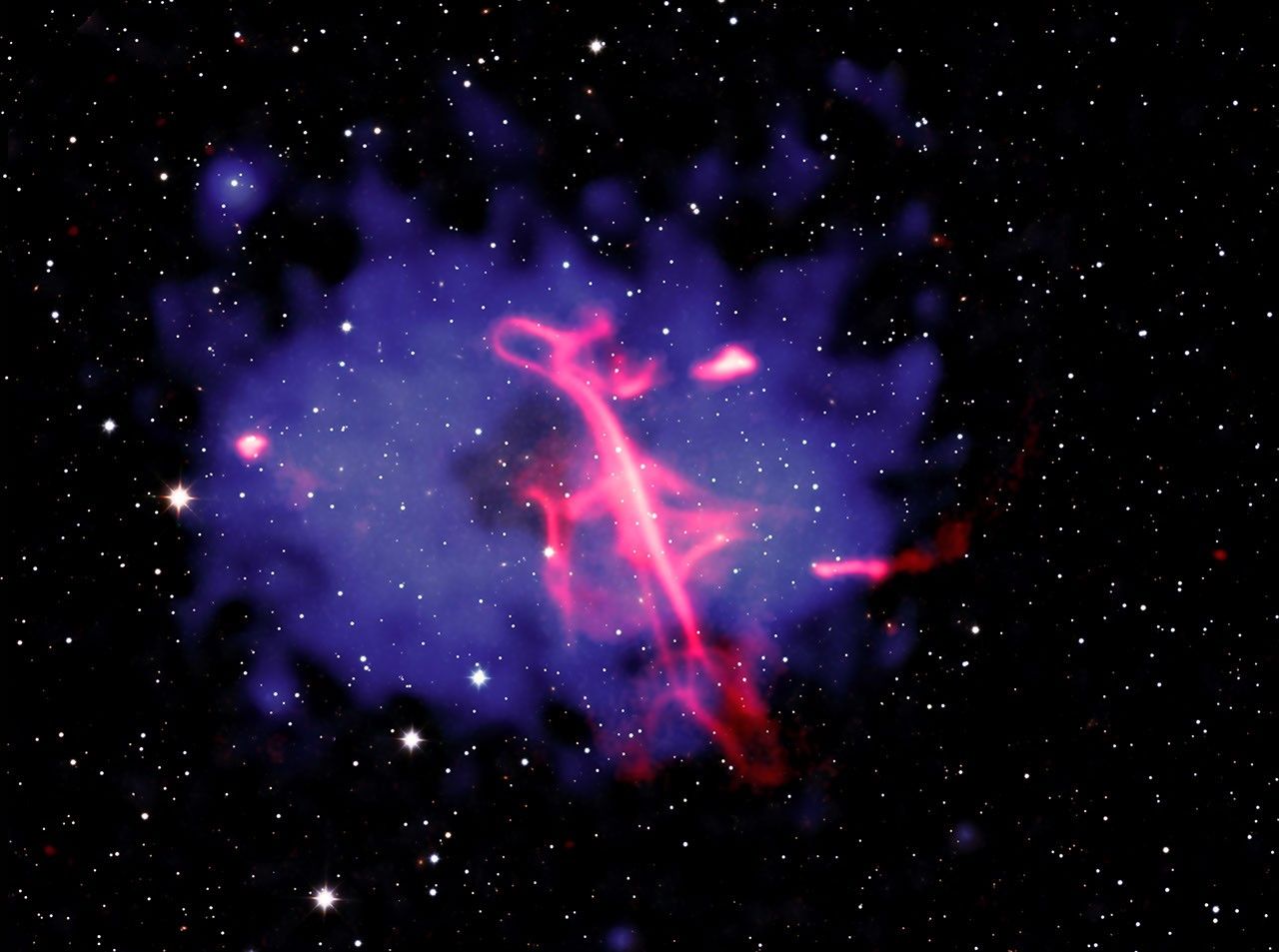
Treble Clef: Unusual X-ray Hot Radio Source
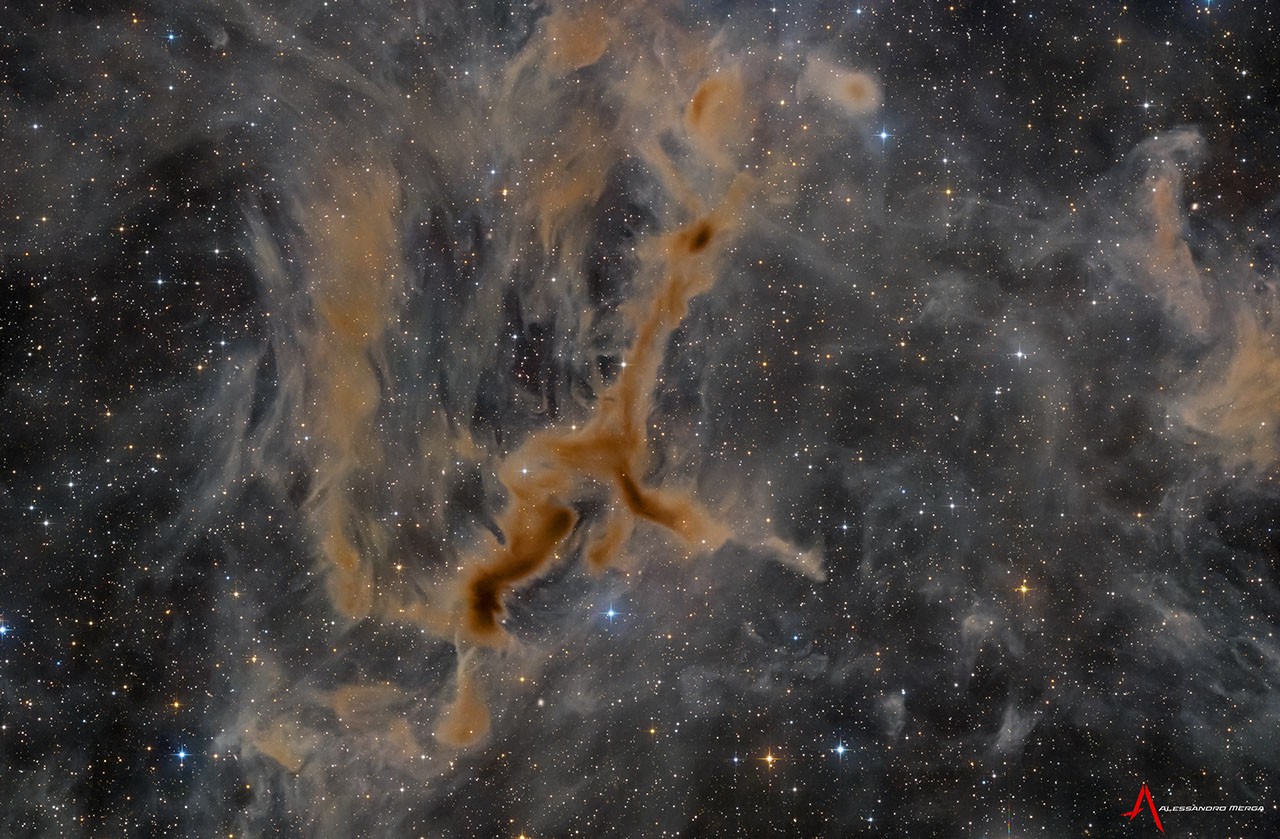
Explanation : What is Treble Clef? This unusual radio structure extends over 2 million light-years and resembles a common musical symbol -- but has its visible light hidden by our ...
I don't write these posts by hand. Every day, an automated system checks a content source and publishes something new without me stepping in. It's the same kind of solution I build for businesses: processes that used to take manual time now run on their own.

Explanation : What is Treble Clef? This unusual radio structure extends over 2 million light-years and resembles a common musical symbol -- but has its visible light hidden by our ...

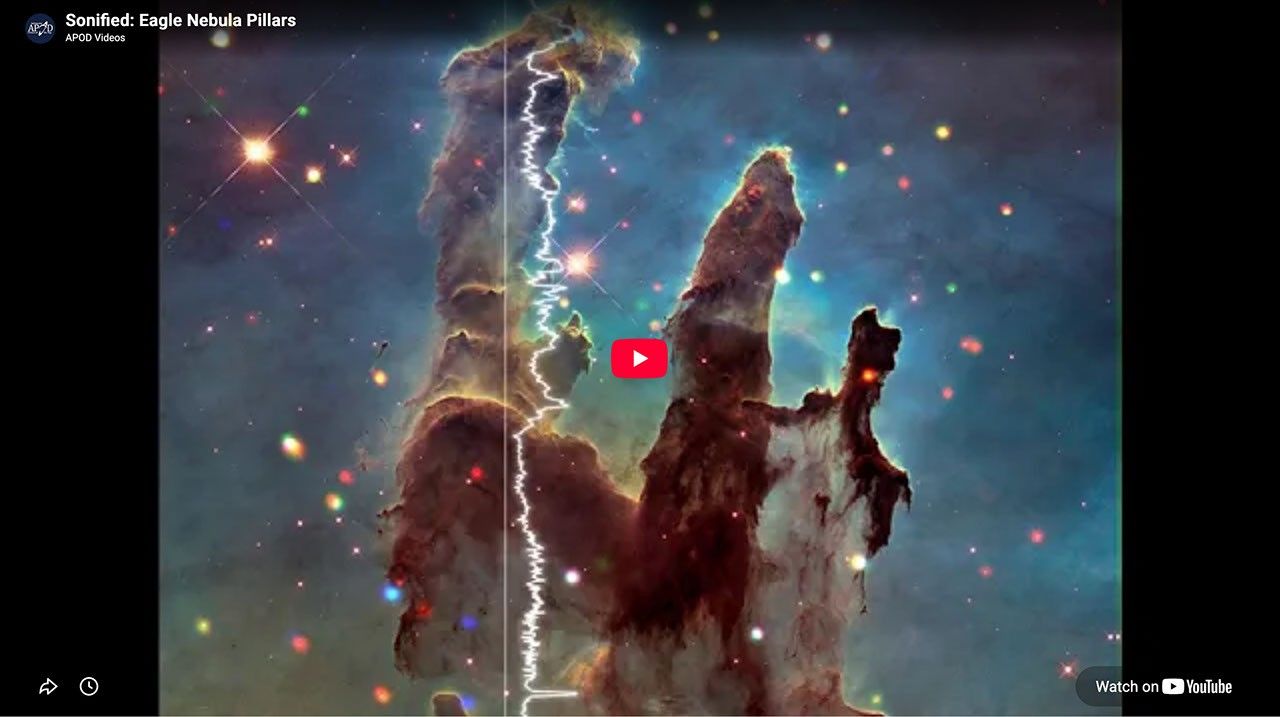
Yes, but have you ever experienced the Eagle Nebula with your ears? The famous nebula M16 is best known for the feast it gives your eyes, highlighting bright young stars forming de...

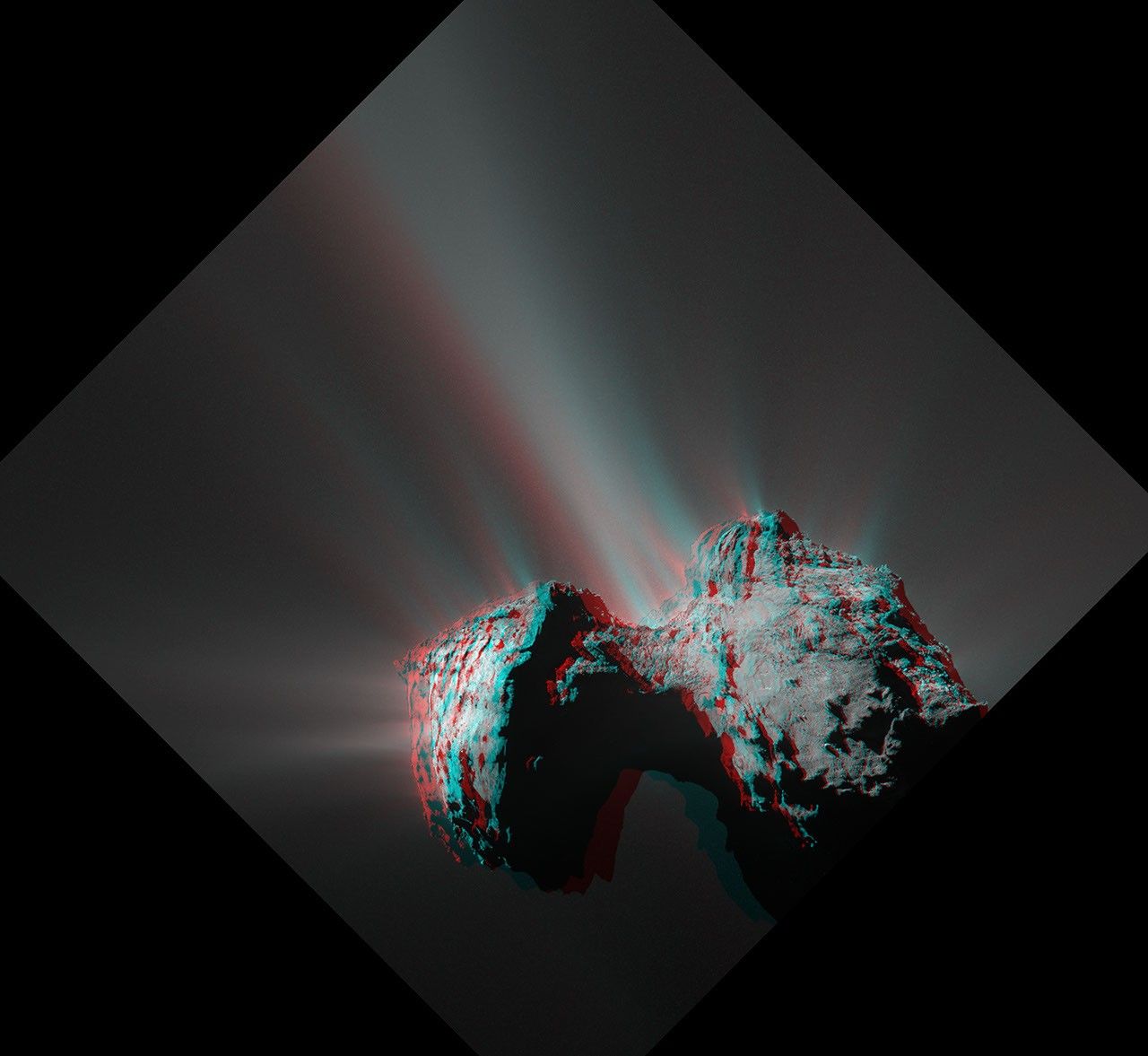
Put on your red/blue glasses and float next to the jagged and double-lobed nucleus of Churyumov-Gerasimenko, also known as Comet 67P . The stereo anaglyph was created by combining ...

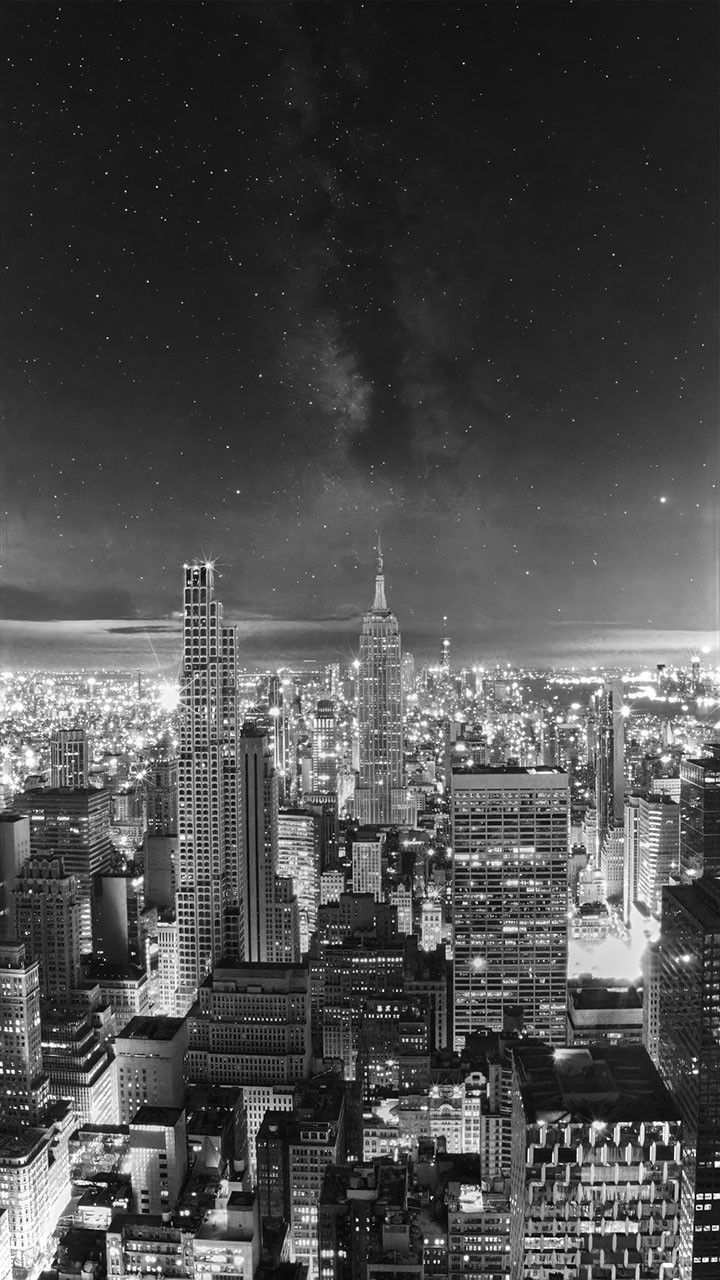
The city lights outshine the stars in the City That Never Sleeps. Who would have thought that the Milky Way could be visible in this sky? This image was taken with a filter that bl...

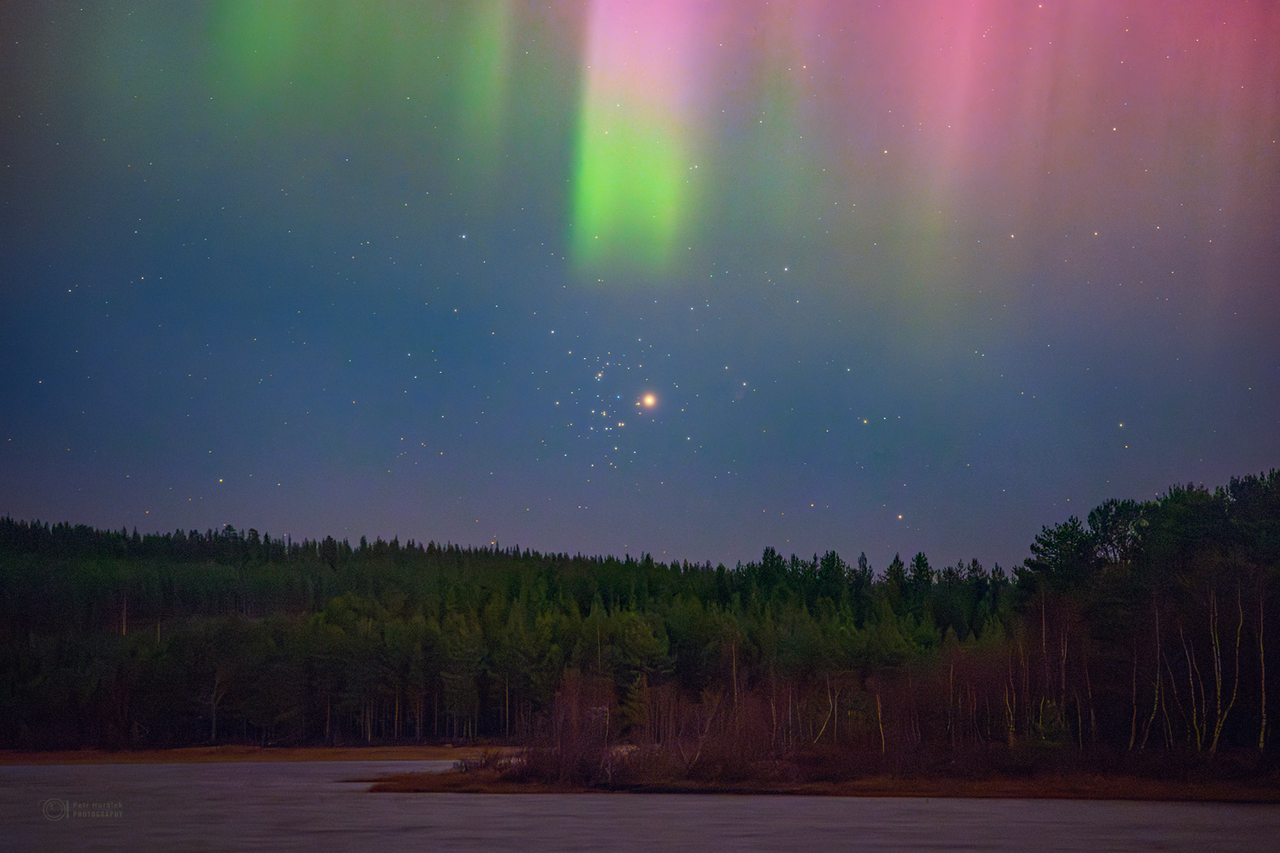
What a cosmic coincidence! In today’s image, Mars joins the Beehive cluster (M44 or Praesepe) below an auroral curtain and above a horizon of happy little trees near Lansjärv, Swed...

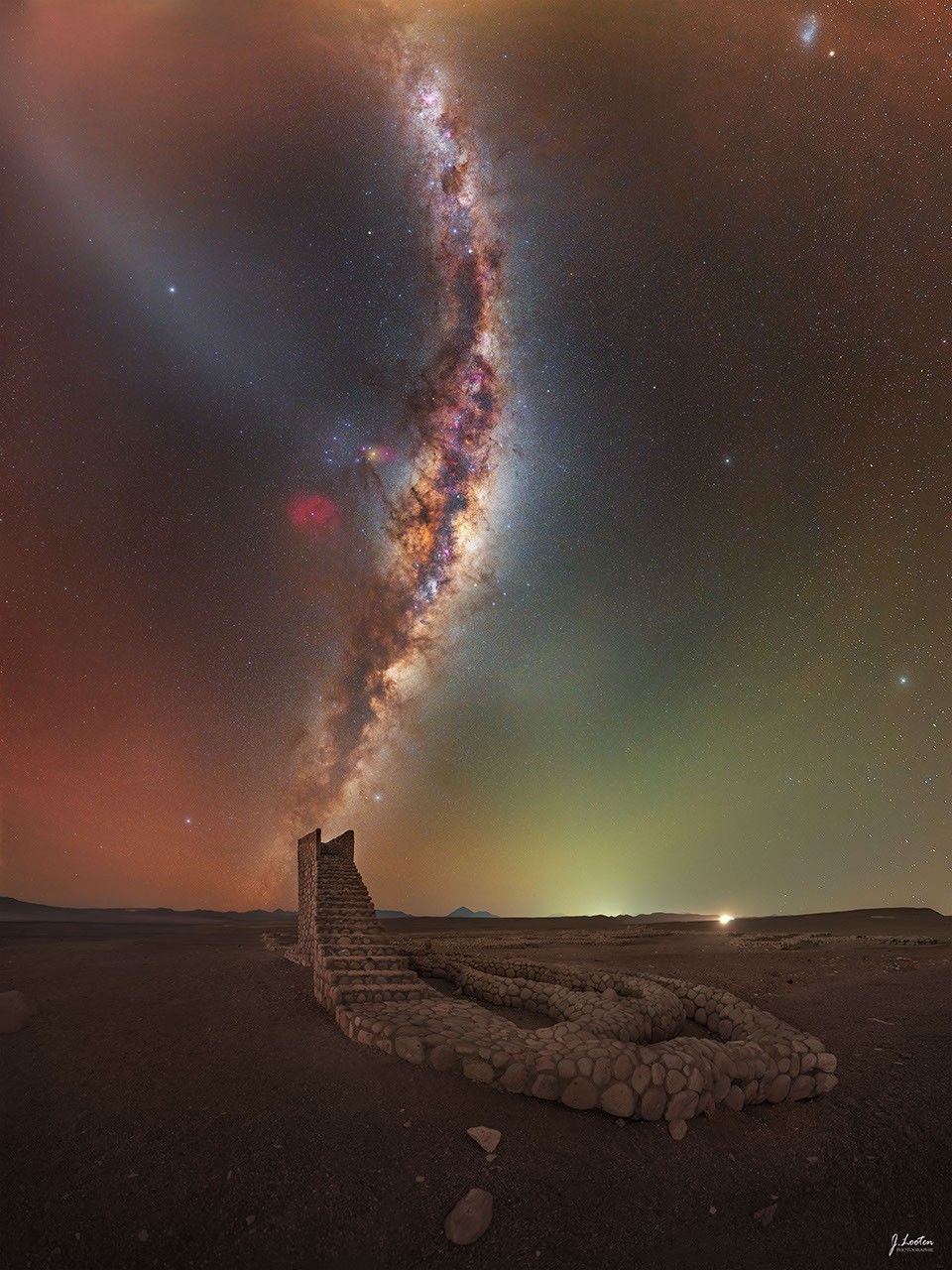
This stairway in Chile brings you only a little bit closer to heaven. But ooh, the sky above it makes you wonder. For example, you may wonder about the dark lane of our own Milky W...

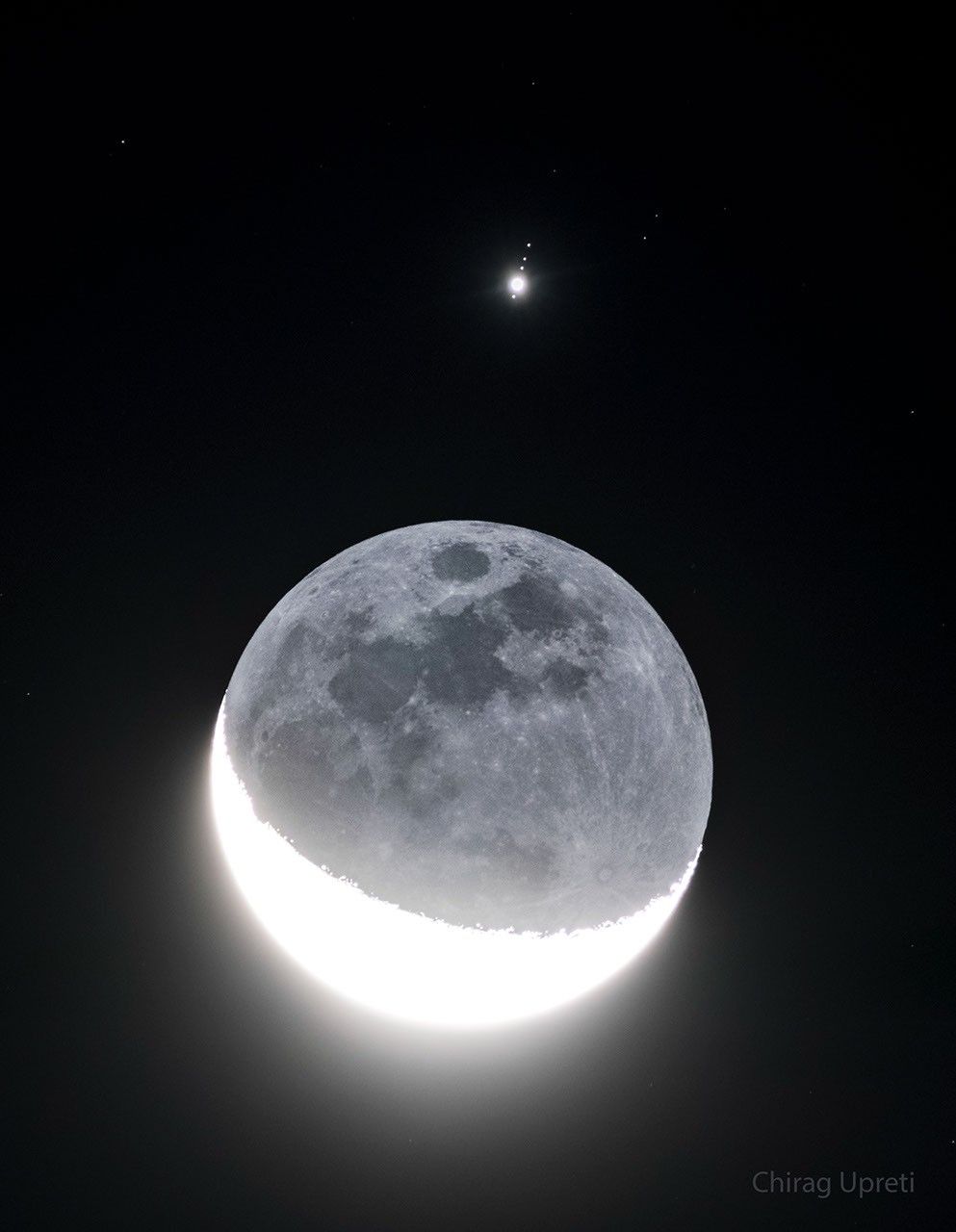
How many moons can you see? The best answer is five: four orbiting Jupiter and Luna orbiting Earth. This multi-moon picture was possible because Earth's Moon moved directly in fron...

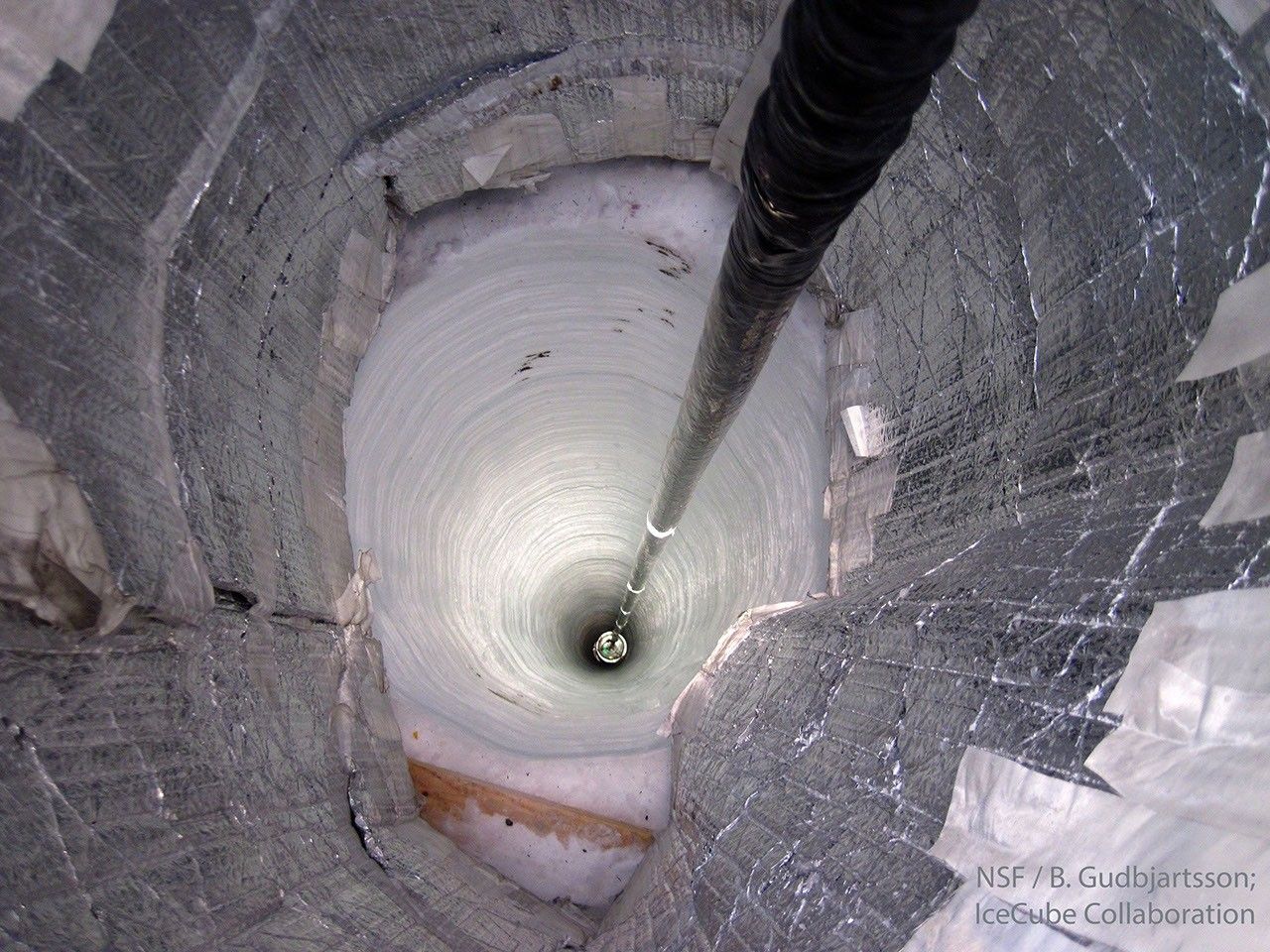
Scientists are melting holes in the bottom of the world. In fact, almost 100 holes melted near the South Pole are now being used as an astronomical observatory. Astronomers with th...

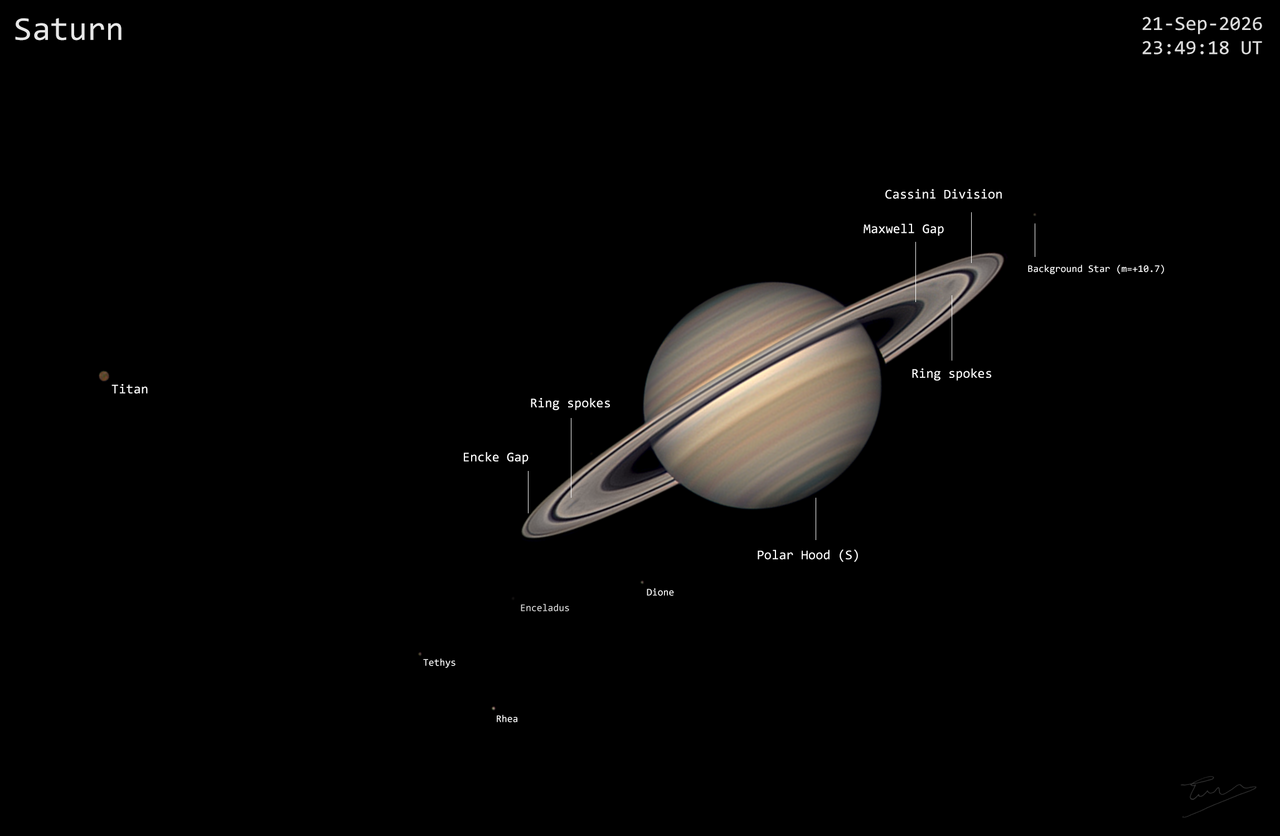
How was the Saturn system imaged so clearly? Astrophotographer Tom Williams captured such exquisite details due to one night of exceptional atmospheric conditions above the United ...

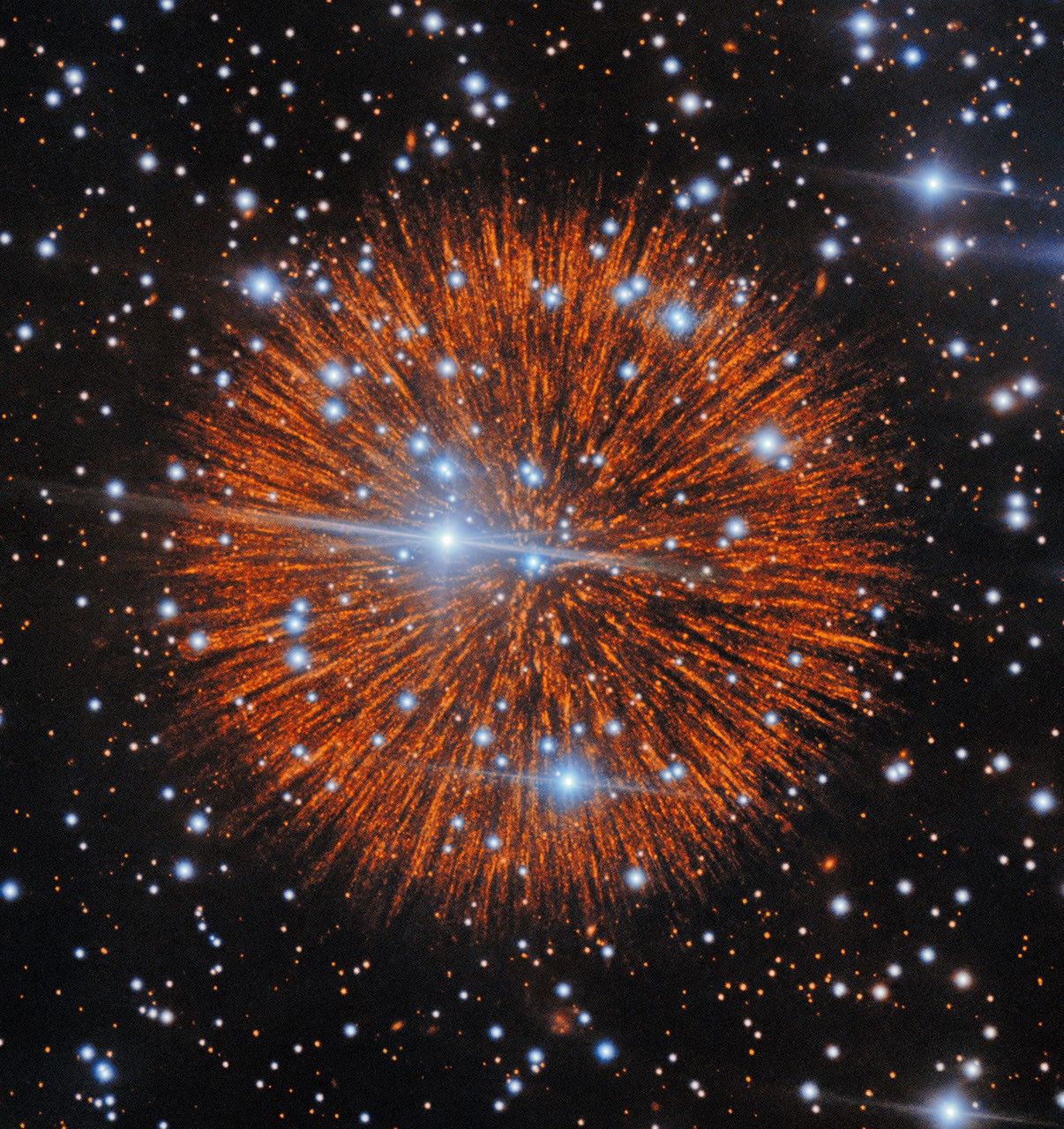
"Happy New Year!" No, wait, this is not a fireworks display. This image shows Nebula Pa 30, observed with the Gemini North Telescope in Hawai'i. It is likely the remnant of an old ...

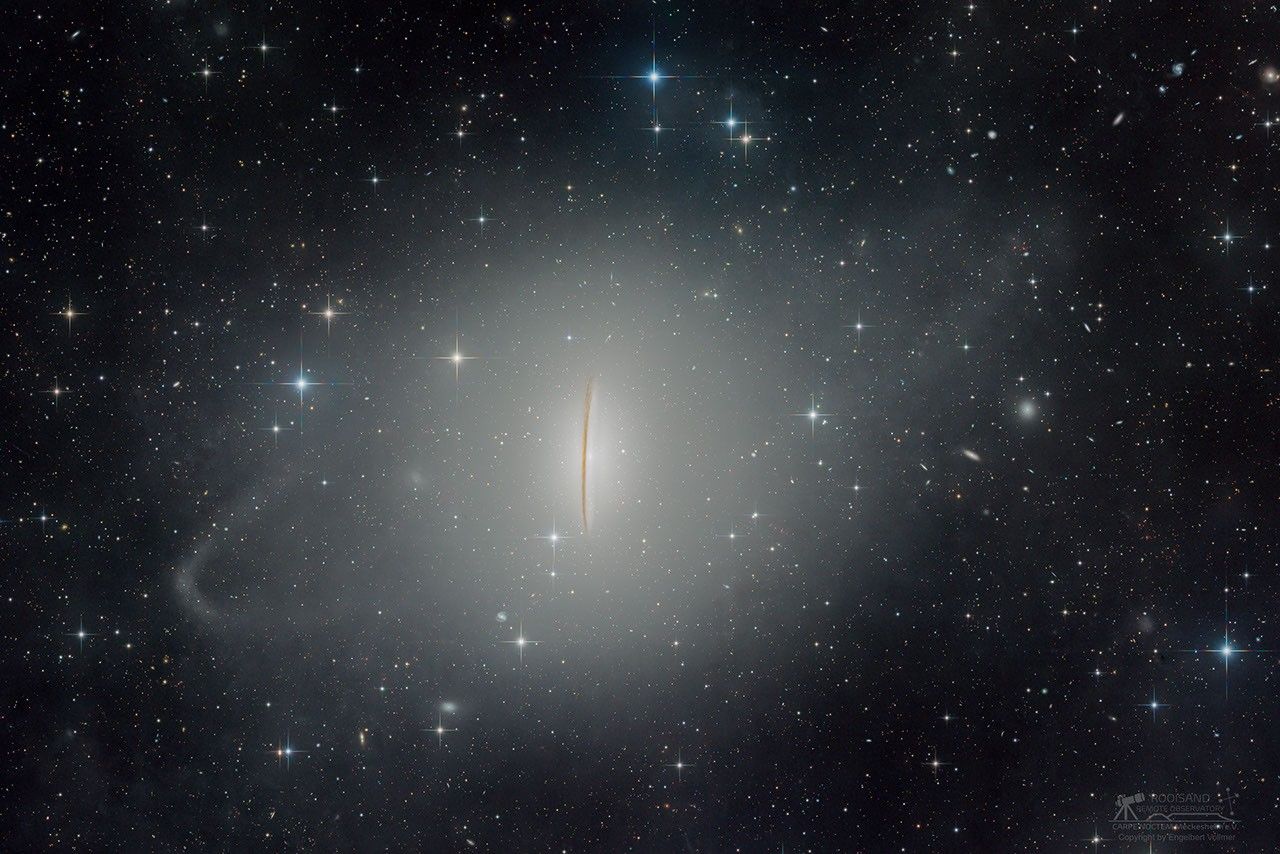
A deep image of the Sombrero galaxy reveals surprises. M104 is named the Sombrero galaxy because, on shorter exposures, it looks like a hat. A key defining feature of this huge gal...

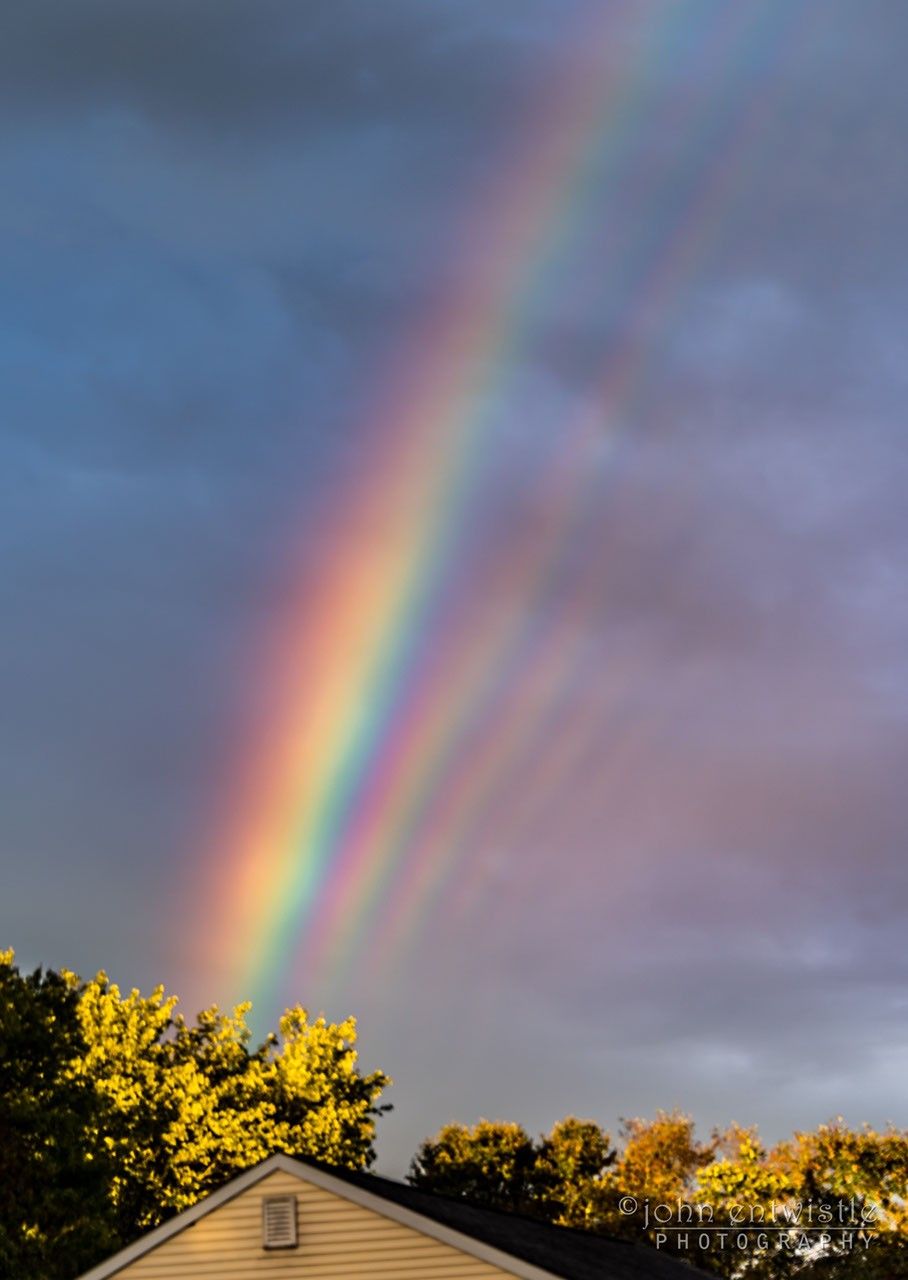
Yes, but can your rainbow do this? After the remnants of Hurricane Florence passed over the Jersey Shore, New Jersey, USA in 2018, the Sun came out in one direction but something q...

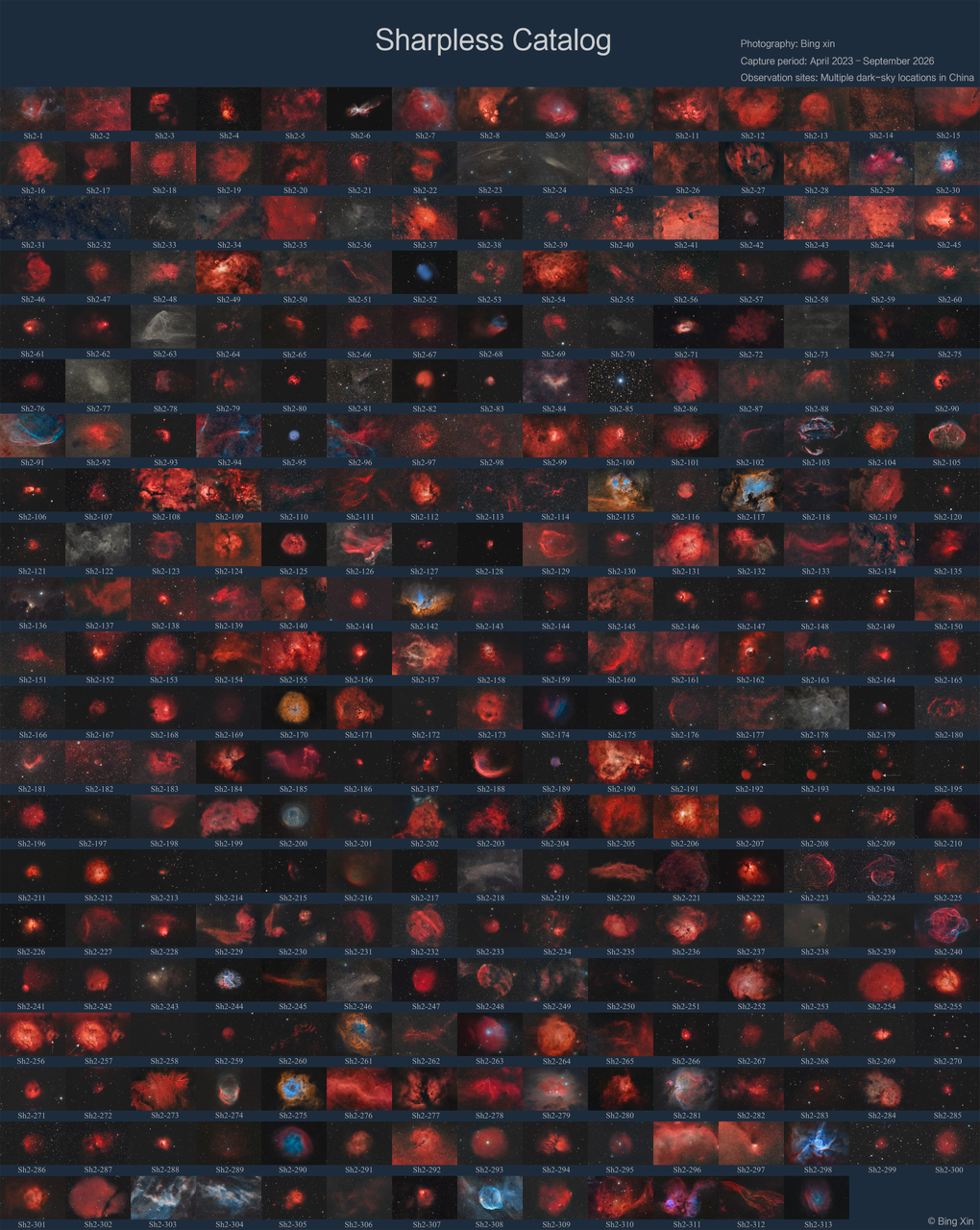
What does it take to image hundreds of nebulas? Today’s image contains the entire Sharpless Catalog of H II Regions, totaling 313 objects. Zoom in and explore! You may spot fan fav...

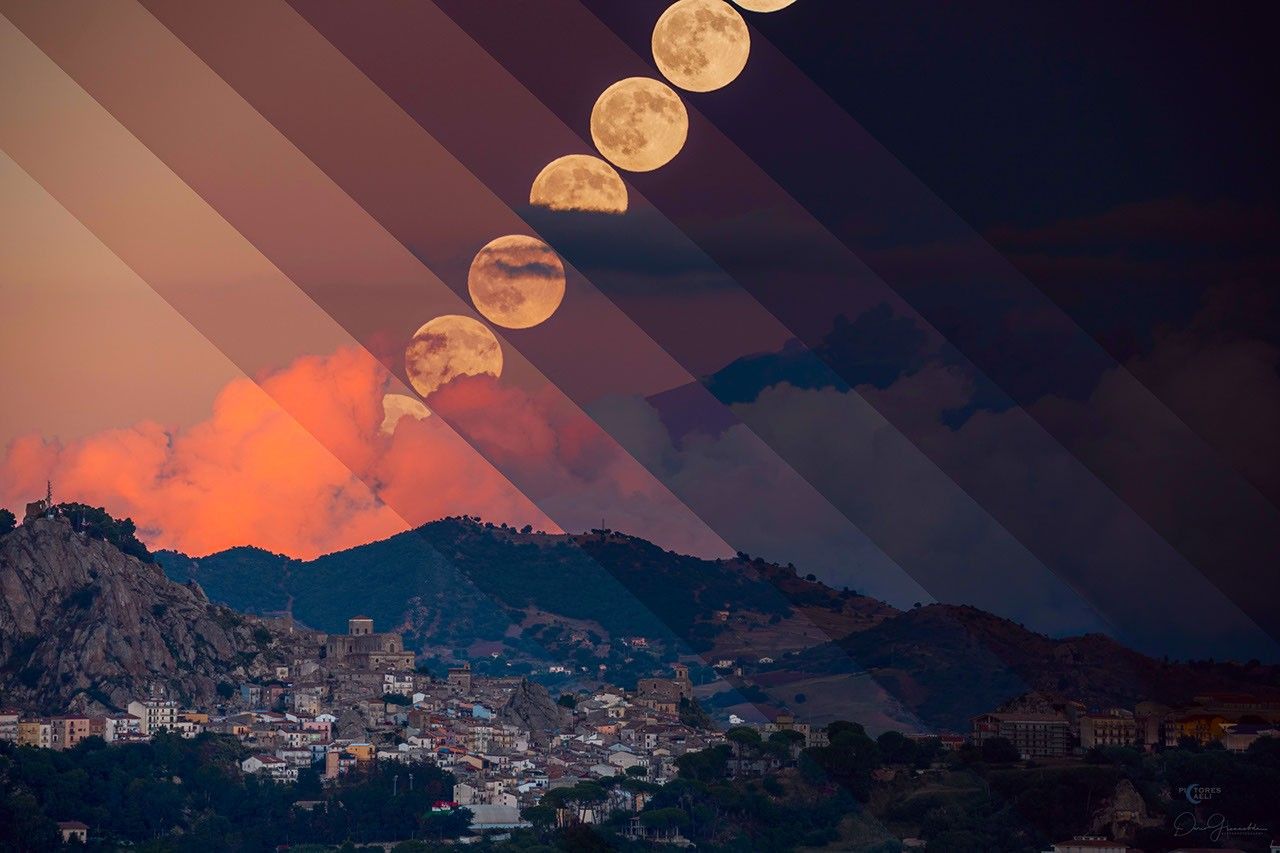
Have you ever seen the full moon rise? This colorful image was photographed last weekend in Sicily, just outside the town of Nicosia, in Italy. It is a composite photograph that sh...

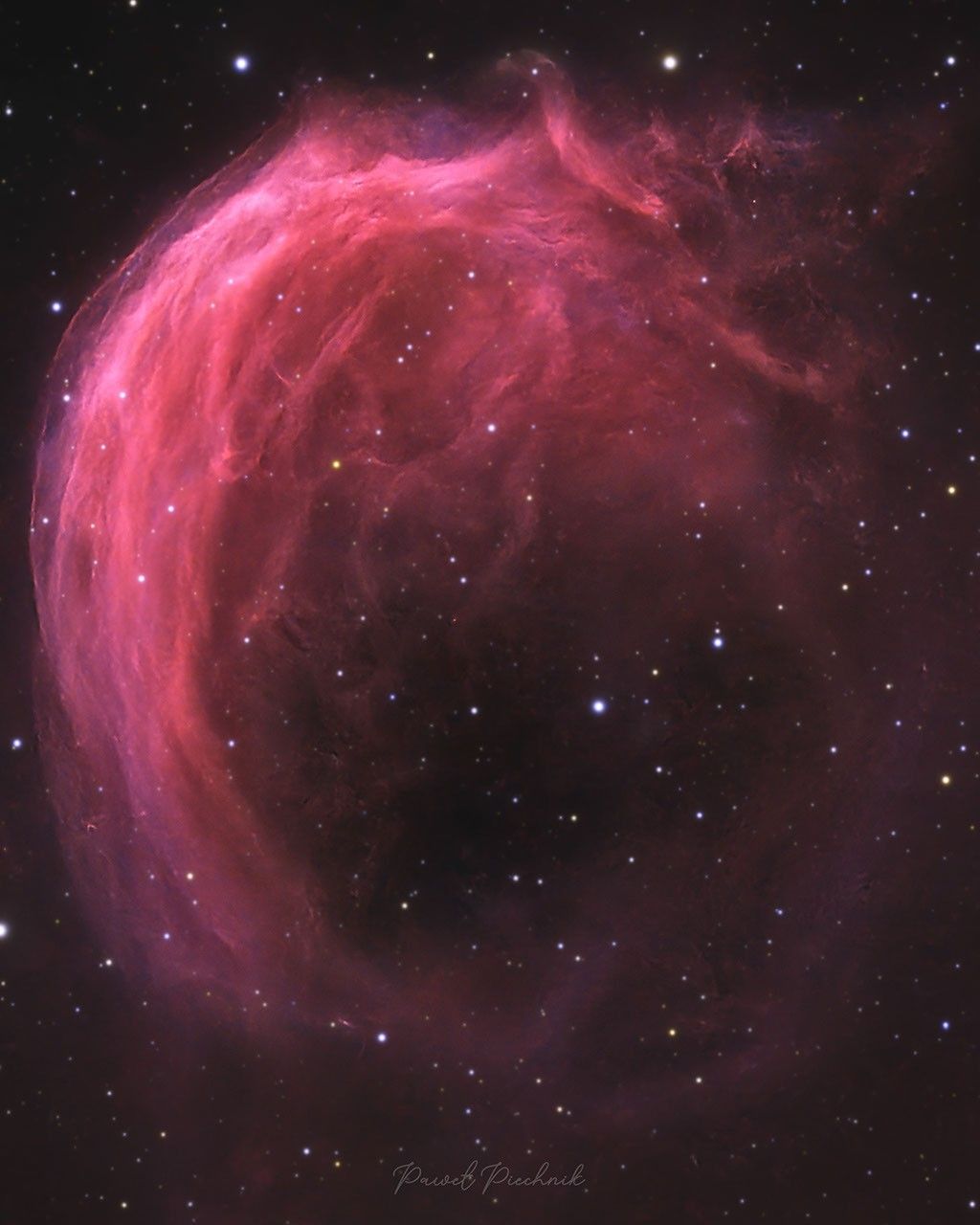
What causes the swirl in the Shrimp Nebula? Its high speed is likely. What is sure is that Sh2-188 is one of the larger planetary nebulas on the night sky, by angular size, spanni...

What color is the universe? More precisely, if the entire sky were smeared out, what color would the final mix be? This whimsical question came up when trying to determine what s...

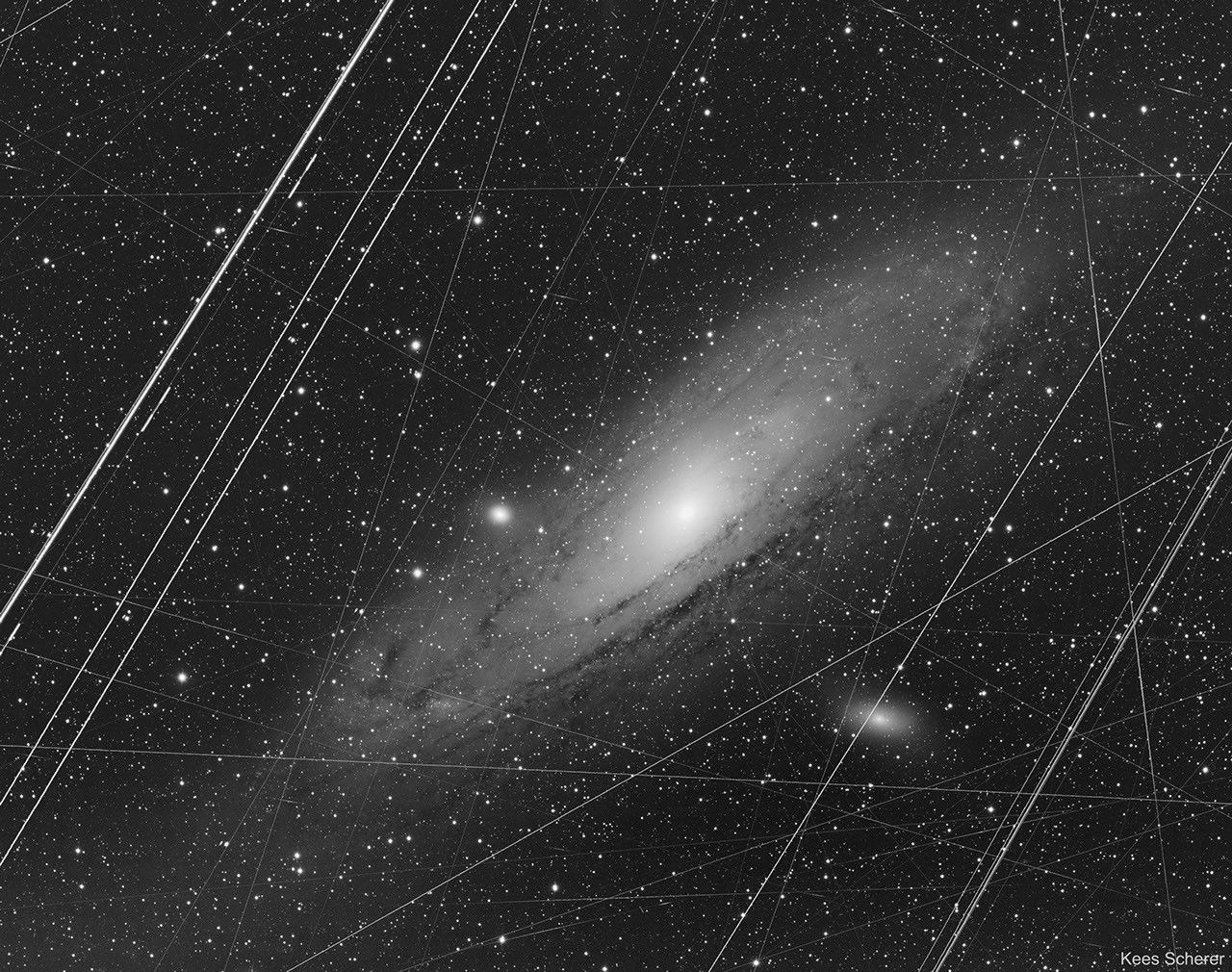
What does the Andromeda galaxy really look like? The featured image shows how our Milky Way Galaxy's closest major galactic neighbor really appears in a long exposure through Earth...

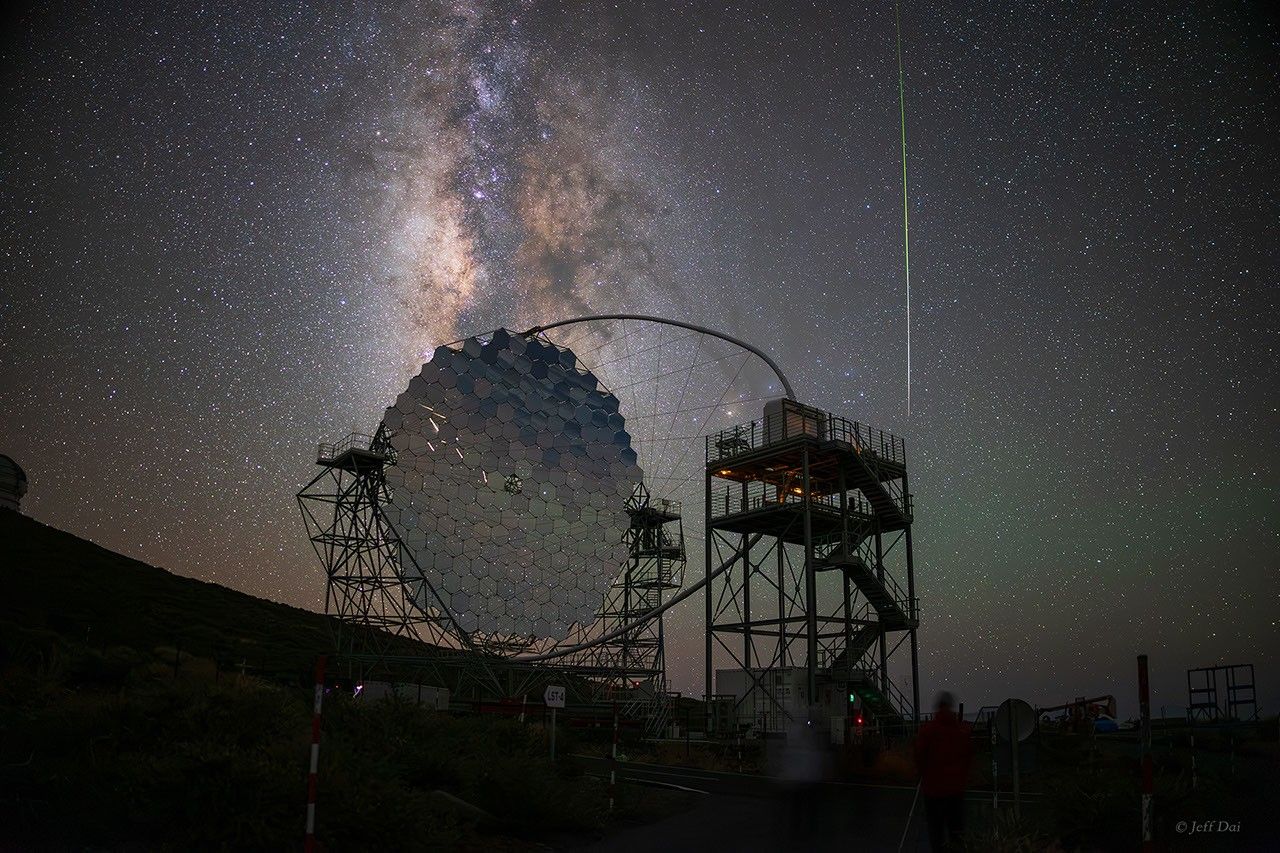
On August 15, this perseid meteor streaked through night skies over the Observatorio del Roque de los Muchachos at La Palma, Canary Islands, Spain. The bright and colorful meteor t...

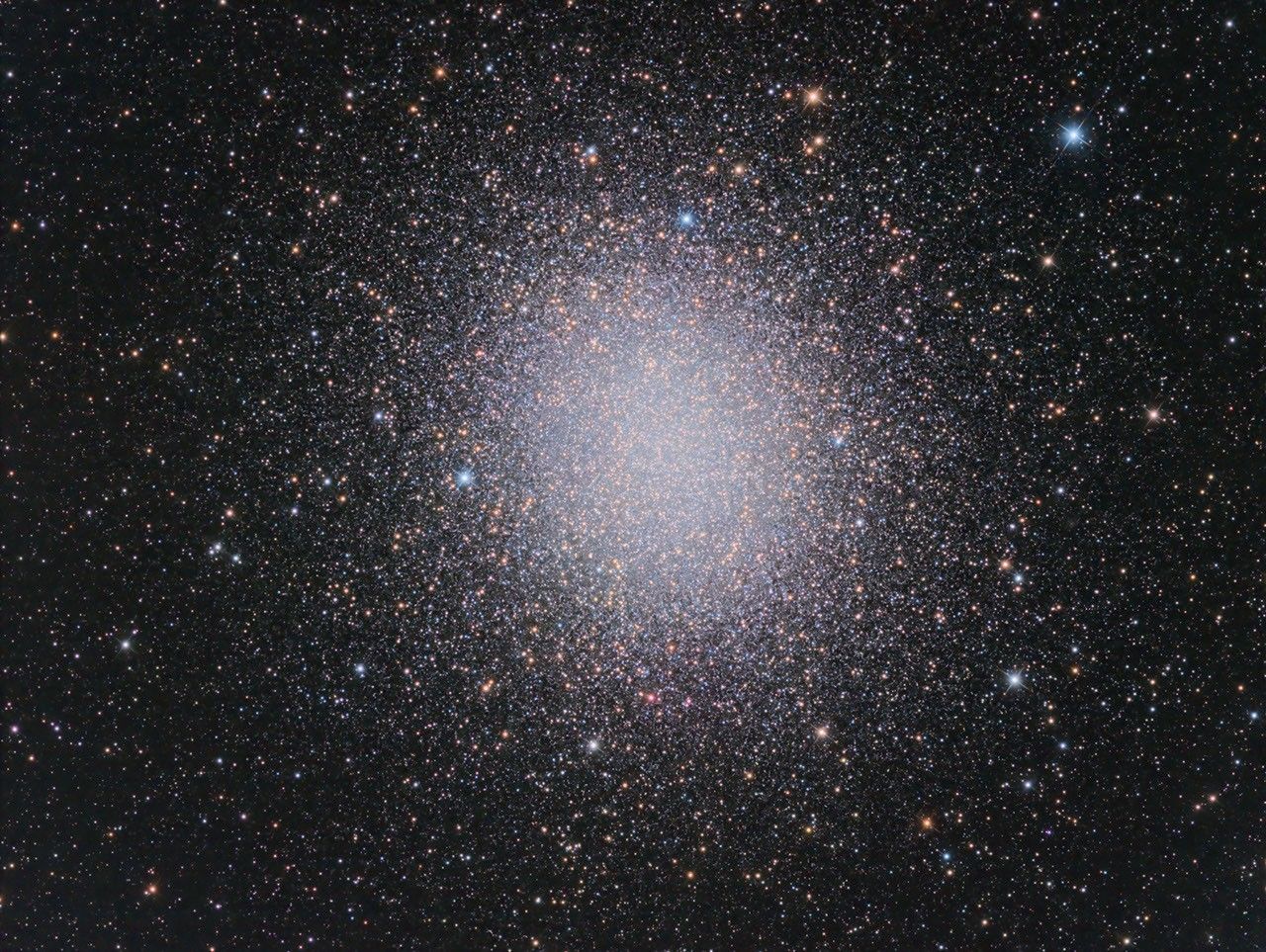
Globular star cluster Omega Centauri packs about 10 million stars much older than the Sun into a volume some 150 light-years in diameter. Also known as NGC 5139, at a distance of 1...

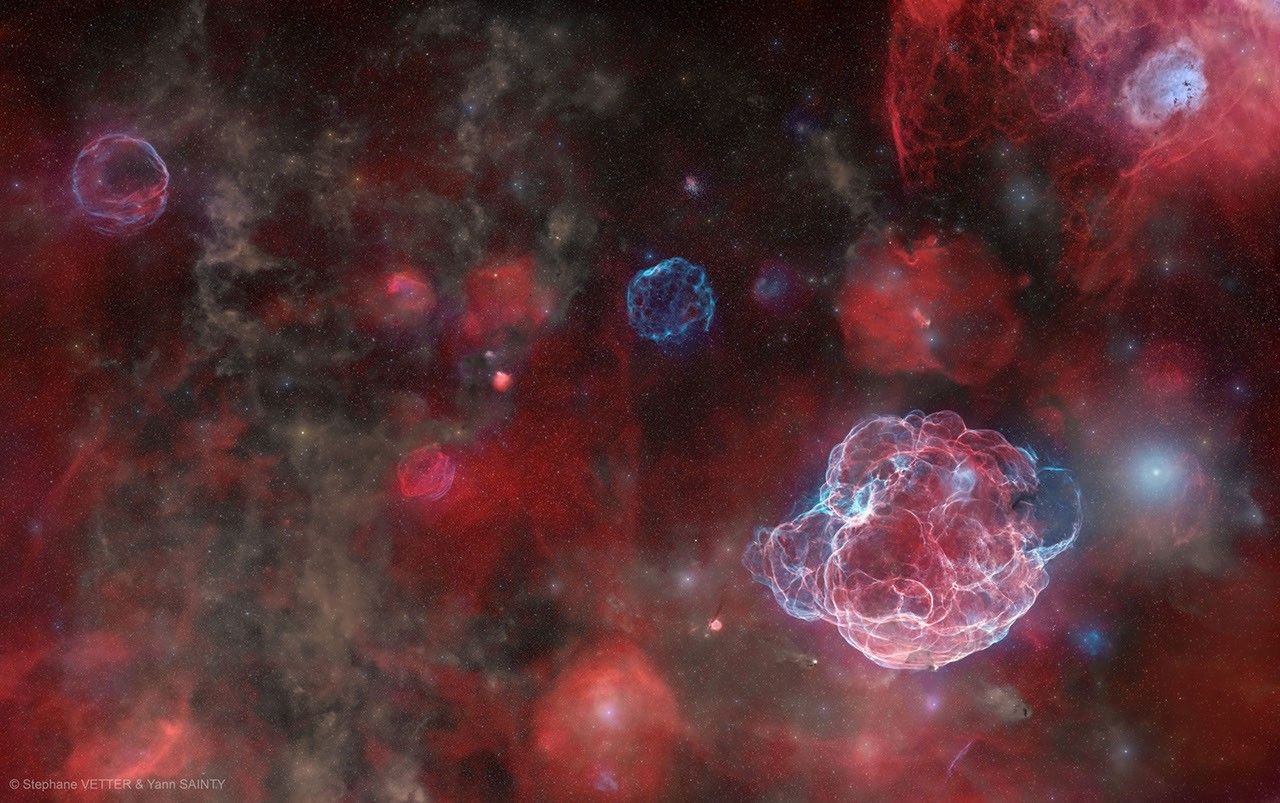
The ghosts of five supernovas haunt this extraordinary image. It was acquired at Oukaïmeden Observatory in Morocco with approximately 200 hours of observations and shows a large ...

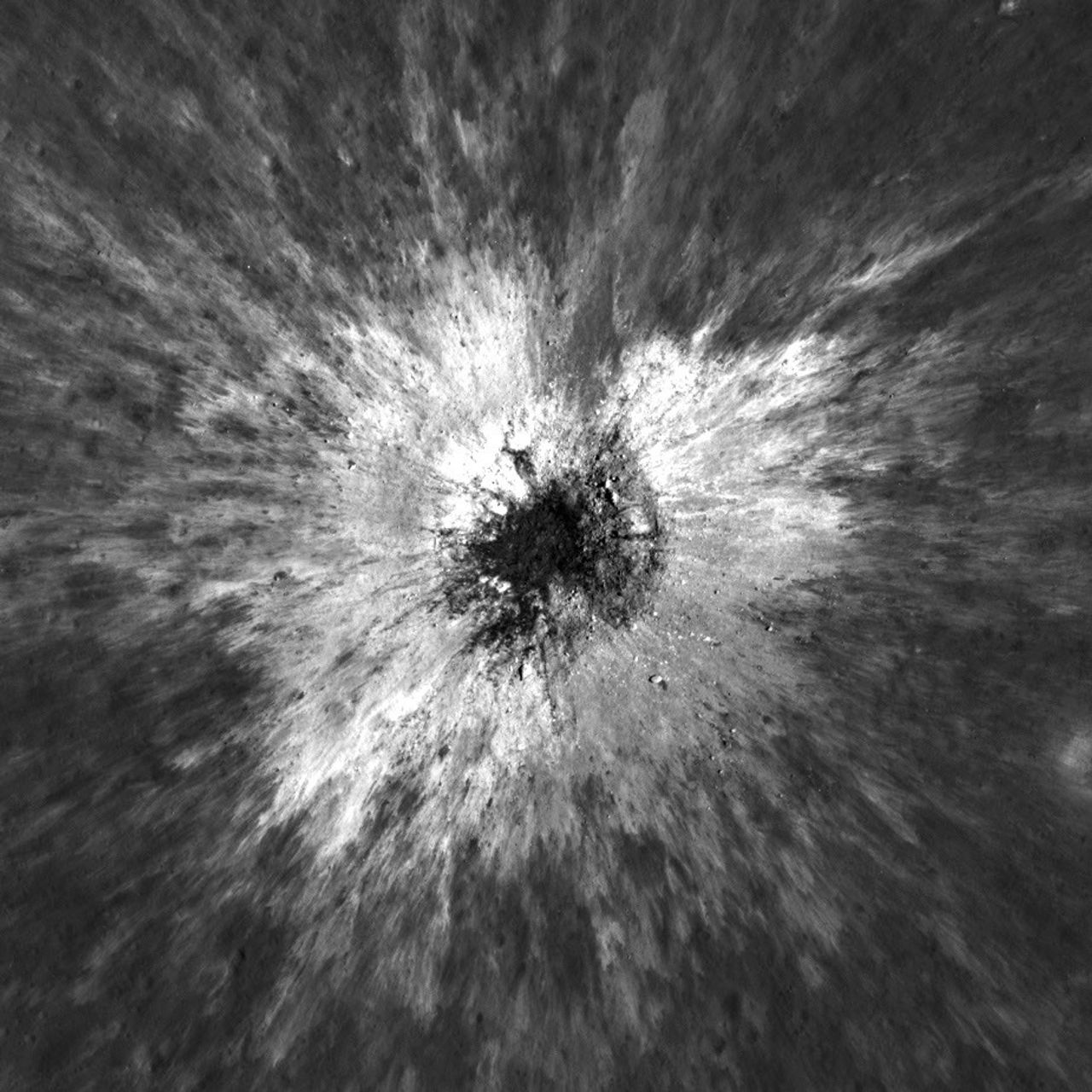
A once-in-a-lifetime crater has appeared on the Moon! A comet or asteroid roughly the size of a humpback whale (approximately 10-20 meters, 30-60 feet) crashed into the Moon someti...

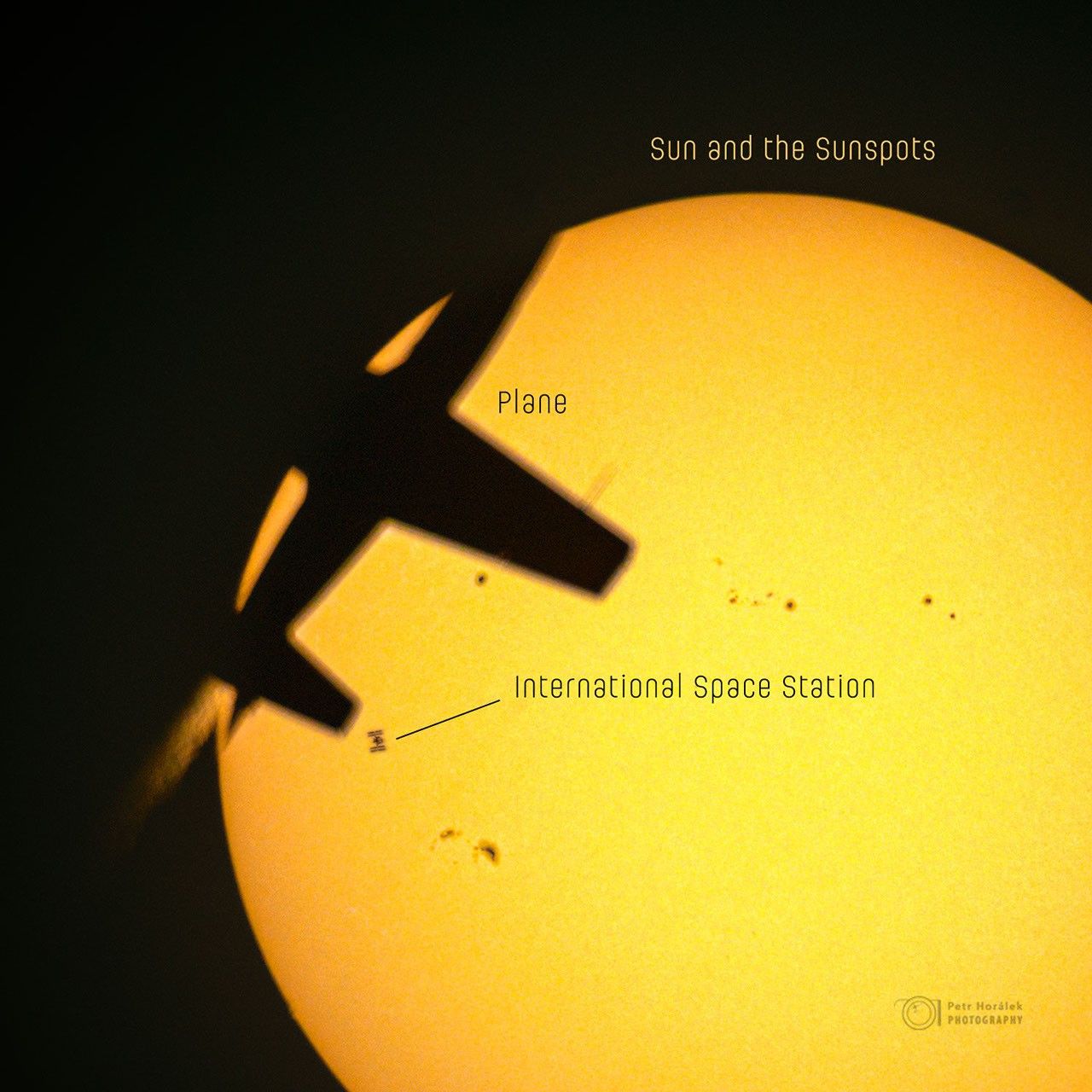
This shot captured an unexpected silhouette. Which is it? It isn't the sunspots, the small dark regions caused by concentrated magnetic fields visible around the Sun's bright disk...

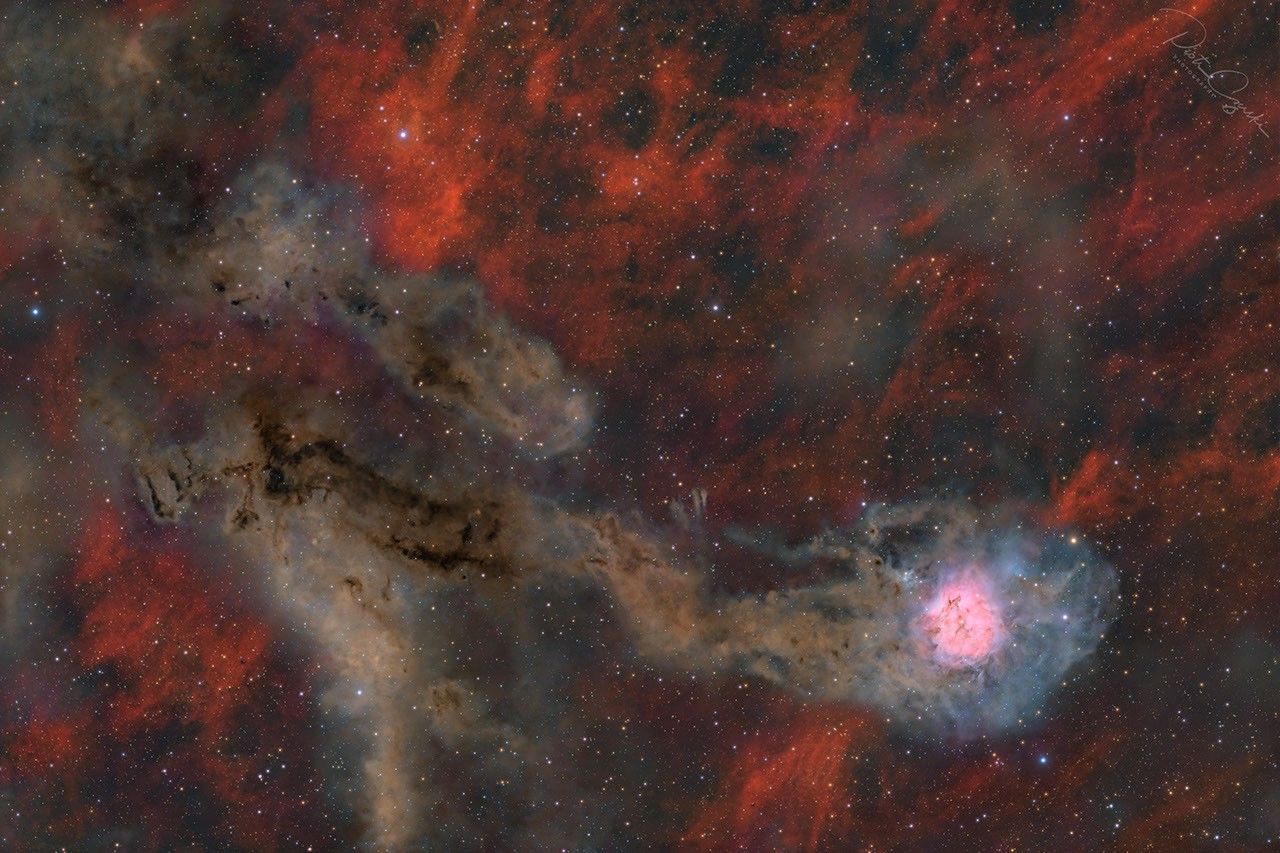
When does a nebula look like a comet? In this crowded starfield covering over two degrees within the high-flying constellation of the Swan (Cygnus), the eye is drawn to the Cocoon...

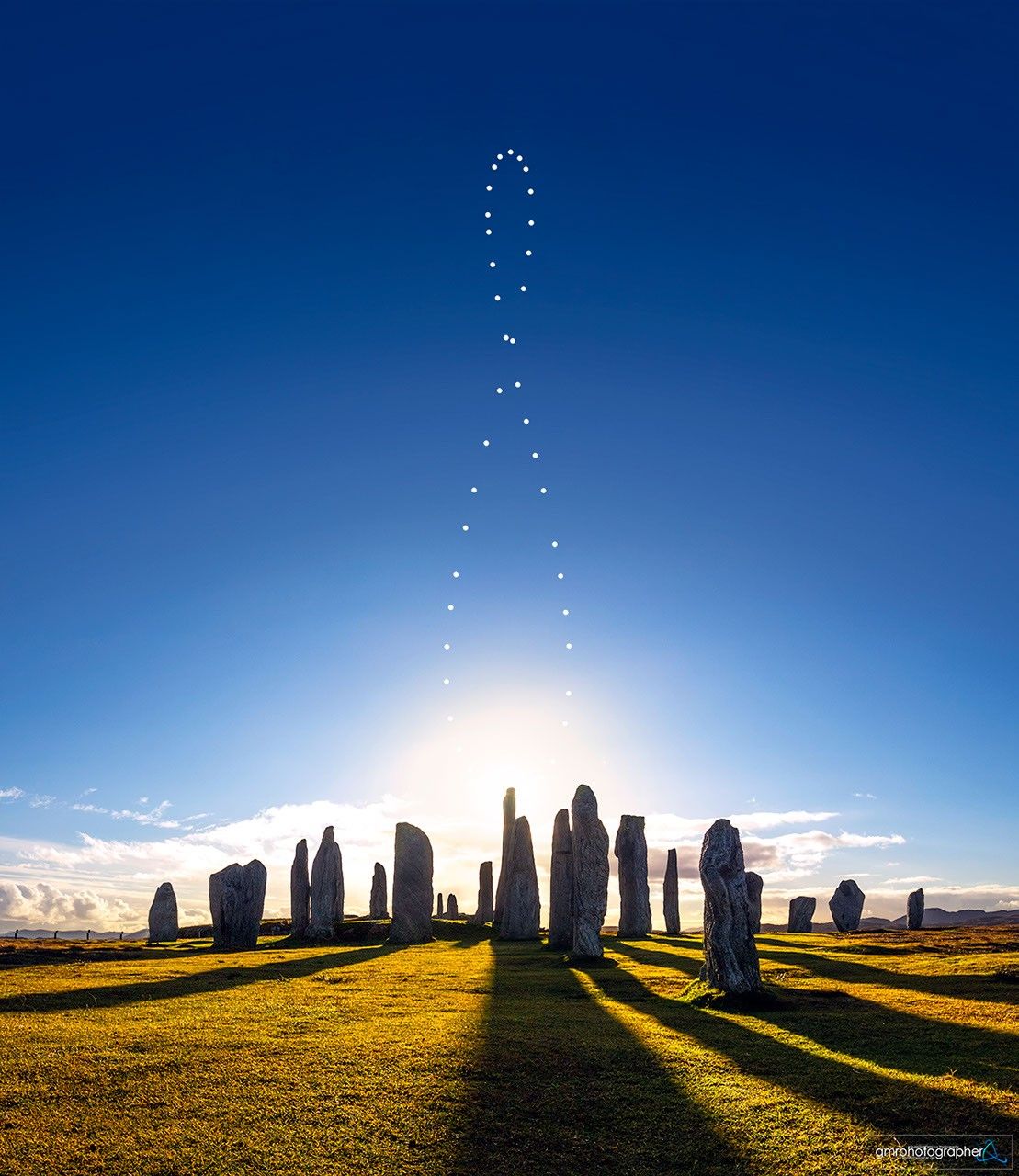
If you went outside at the same time every day and took a picture that included the Sun, how would the Sun's position change? A visual answer to that question is an analemma, a co...

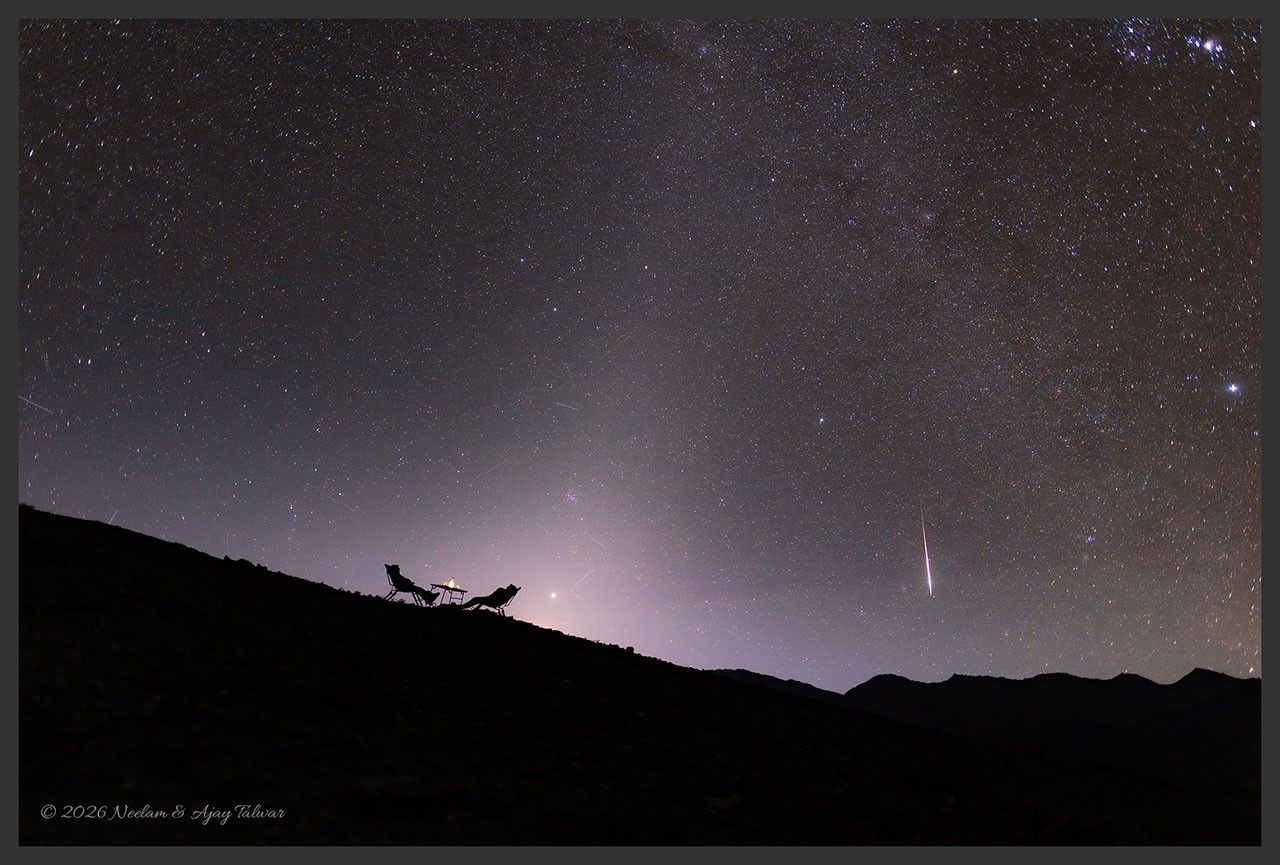
Also known as the false dawn, a luminous band of zodiacal light is captured in this dark night skyscape. The serene view was recorded just before the beginning of astronomical twil...

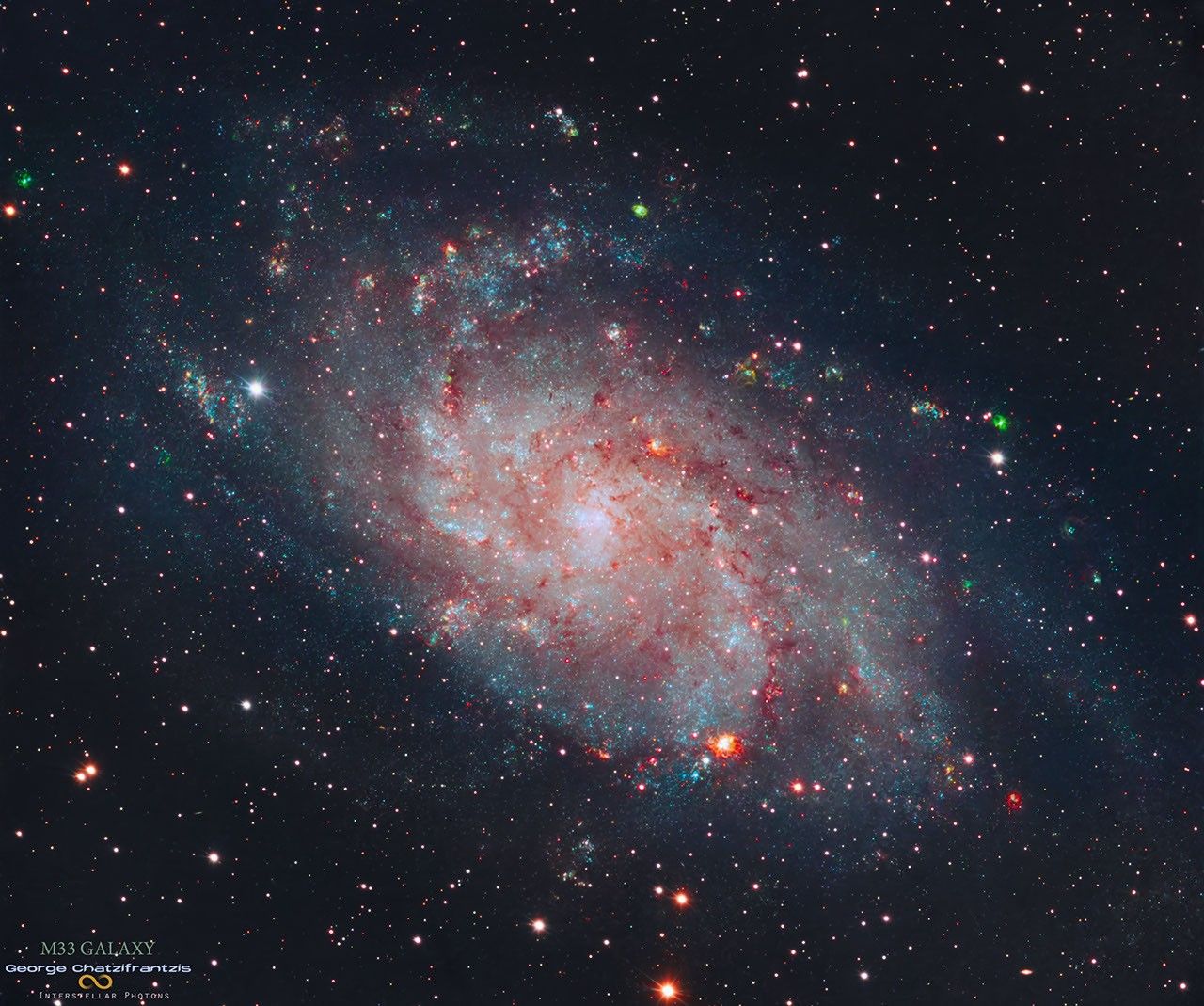
The small, northern constellation Triangulum harbors this magnificent face-on spiral galaxy, Messier 33. Its popular names include the Pinwheel Galaxy or just the Triangulum Galaxy...

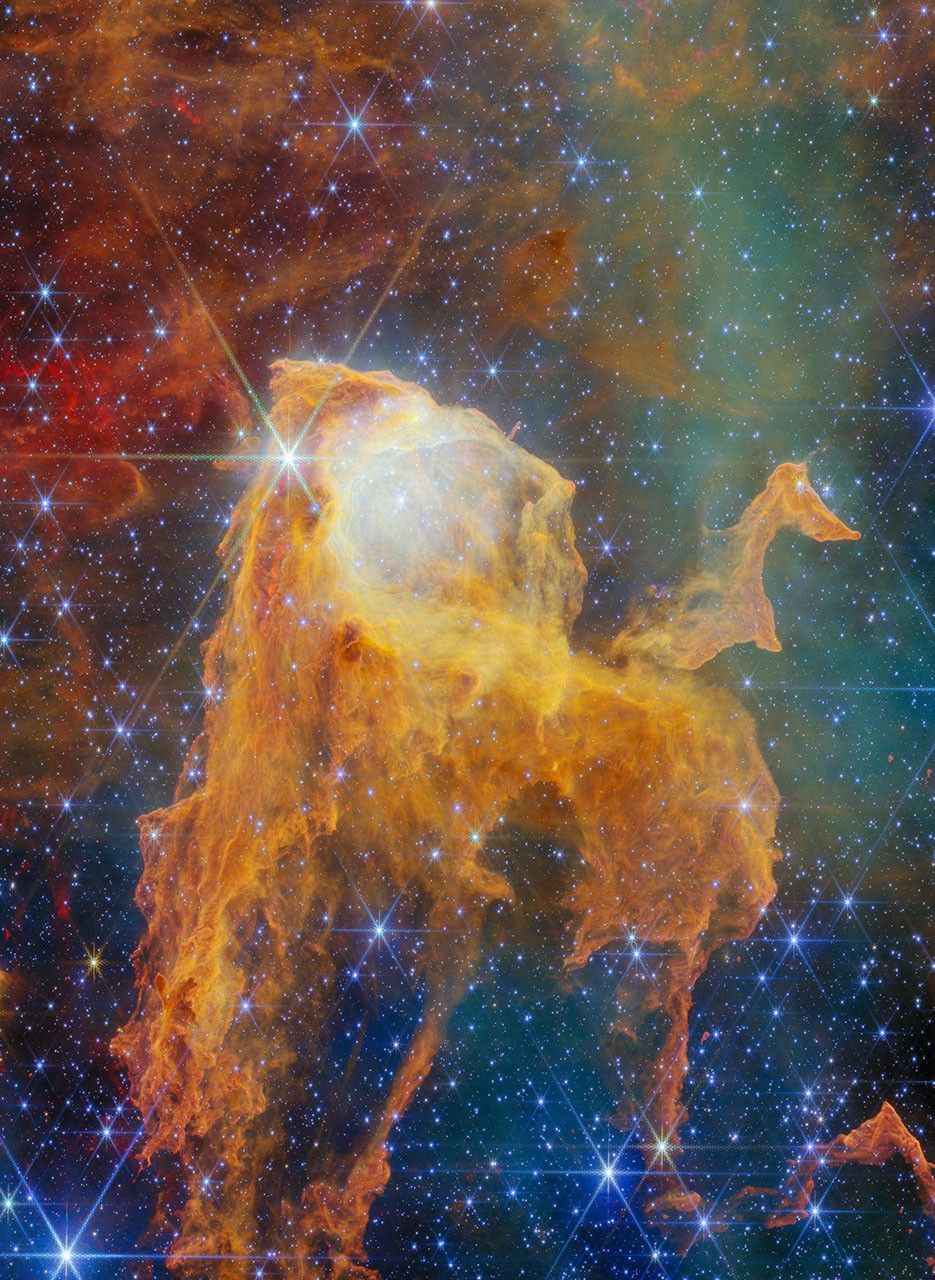
This treasure chest is full of stars. The featured image was obtained with NASA's James Webb Space Telescope and shows a dust pilar in the Carina Nebula inside our Galaxy, roughl...

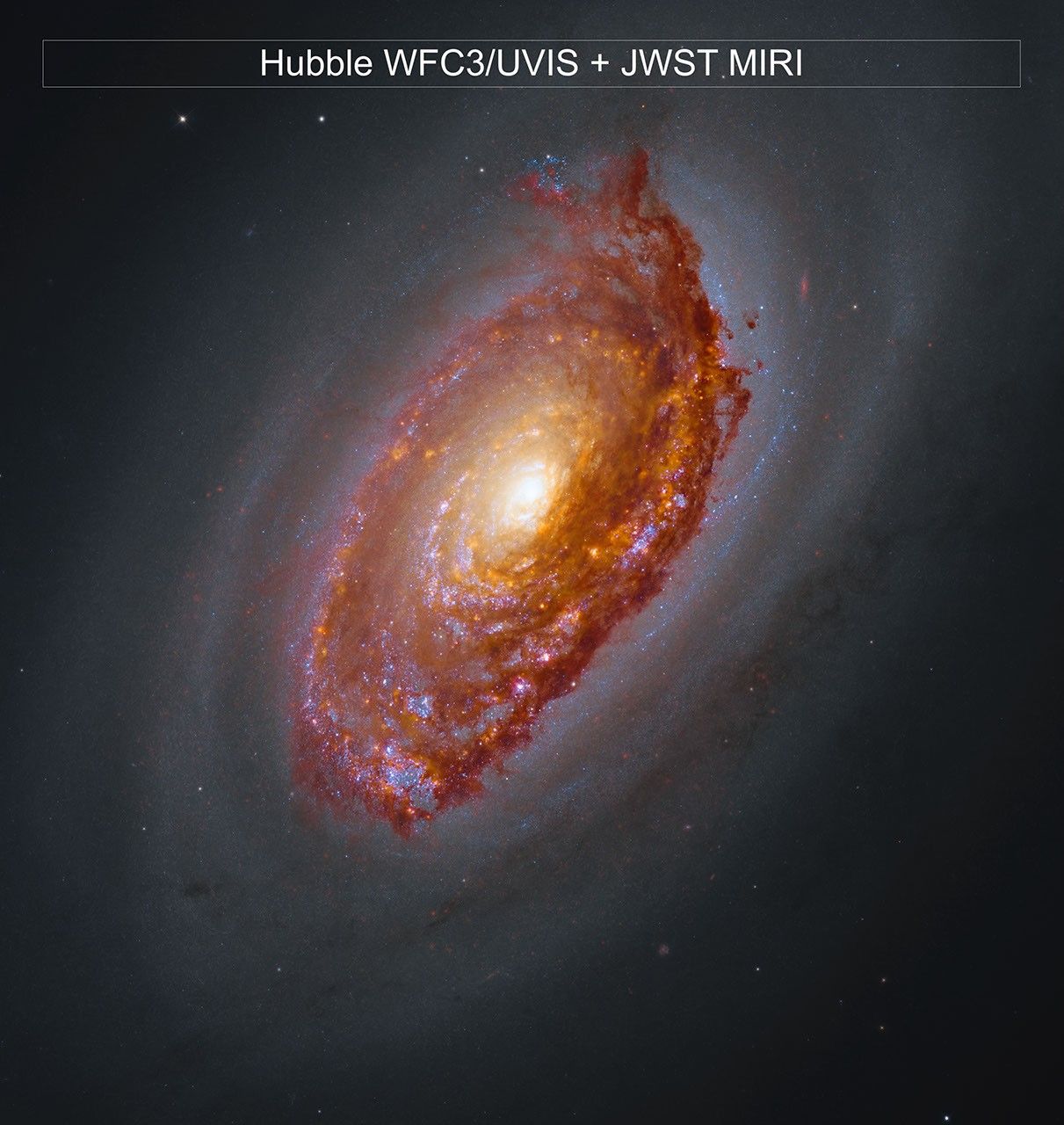
Sometimes where Hubble finds darkness, Webb sees light. An example is today’s composite images of Messier 64 (M64), a nearby spiral galaxy of many names. The dark band of dust part...

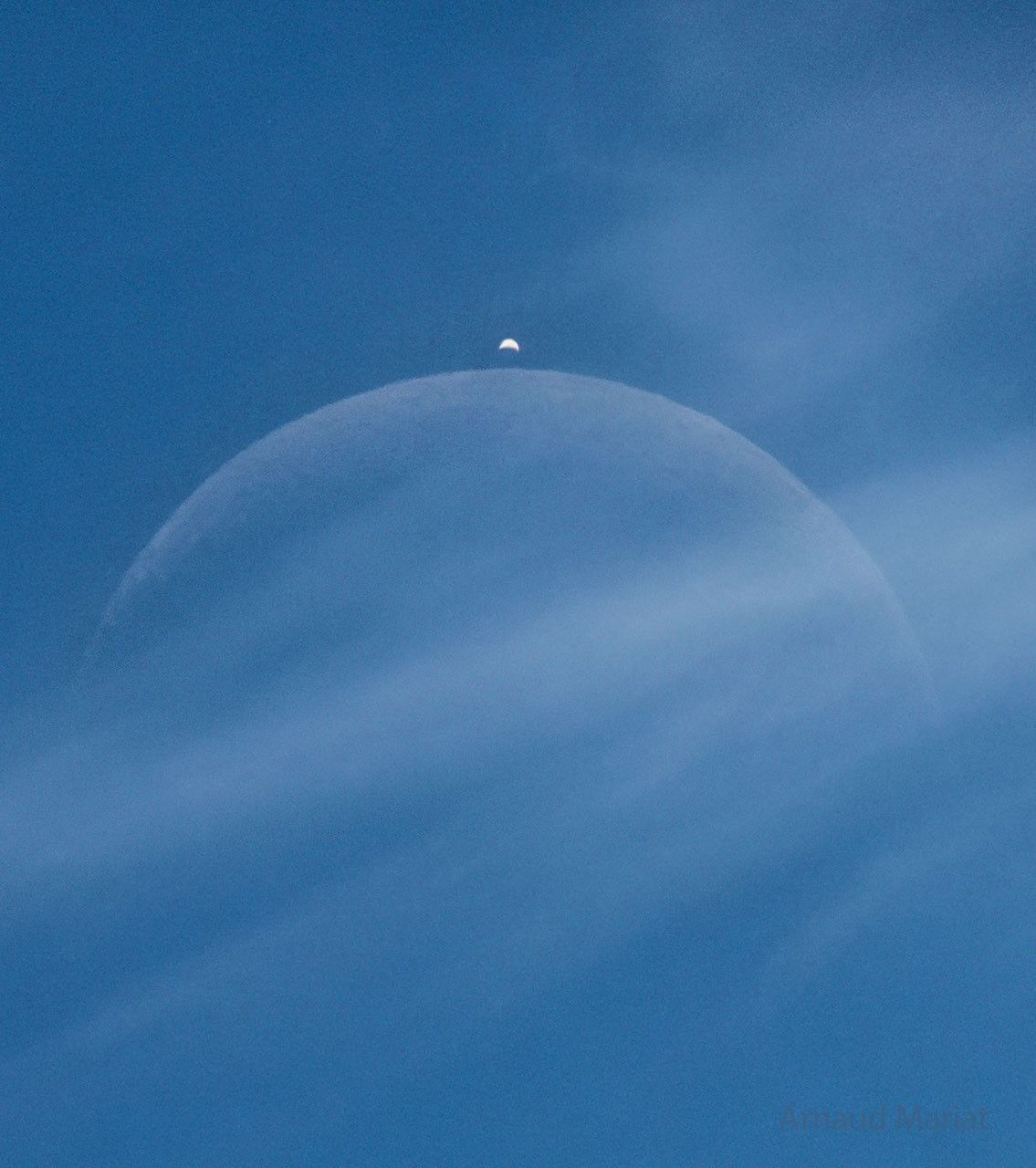
There was something behind the clouds. Upon close inspection, it was the Moon, which was hard to see yesterday around noon above the small village of Cessy, France. But soon, it ...

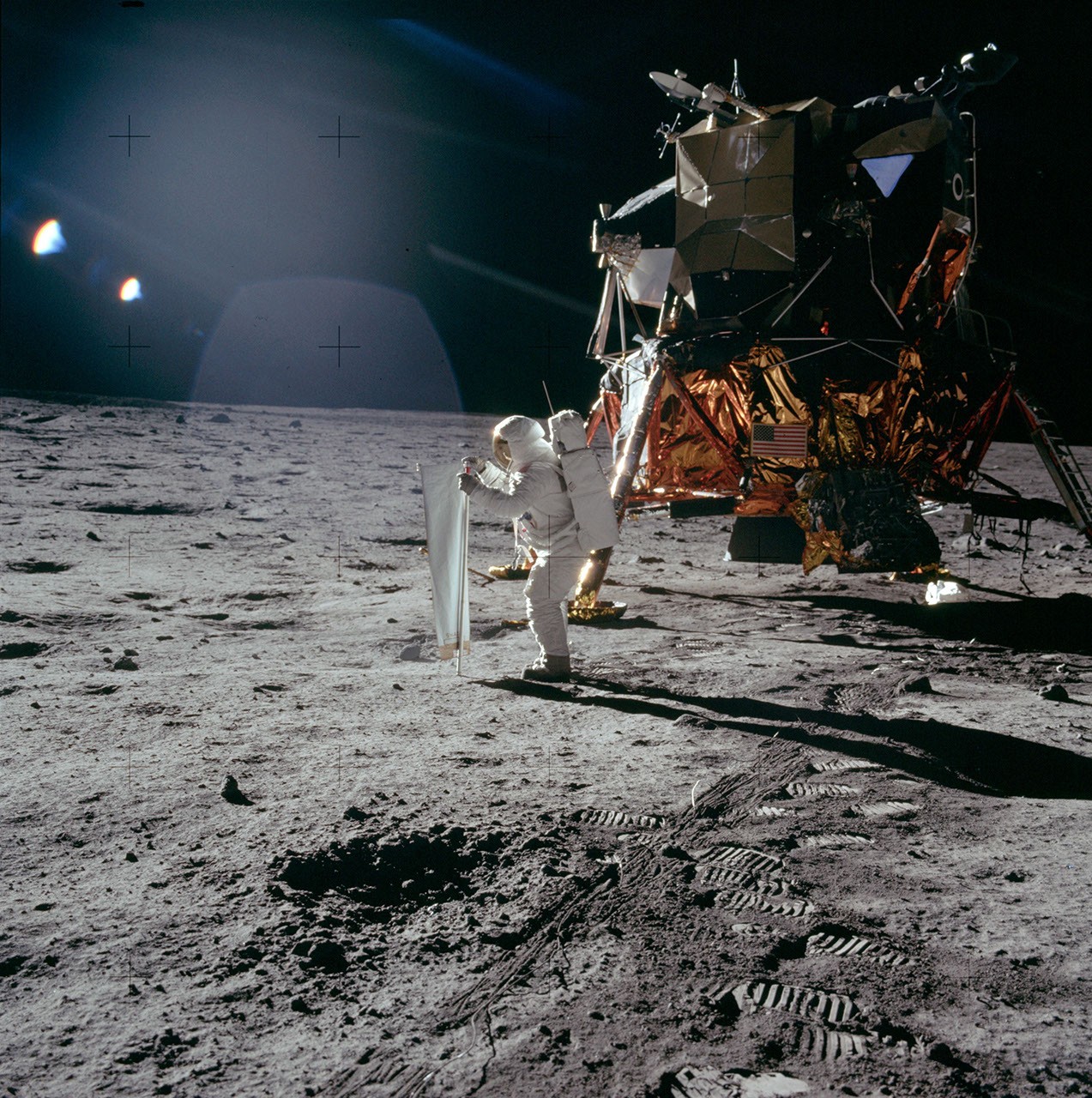
Bright sunlight glints as long dark shadows mark this image of the surface of the Moon. It was taken on July 20, 1969, by Apollo 11 astronaut Neil Armstrong, the first to walk on t...

What does this image look like to you? Many see a giraffe facing right, with neck stretched high and long legs mid-stride (but some may see a squirrel instead). The featured im...

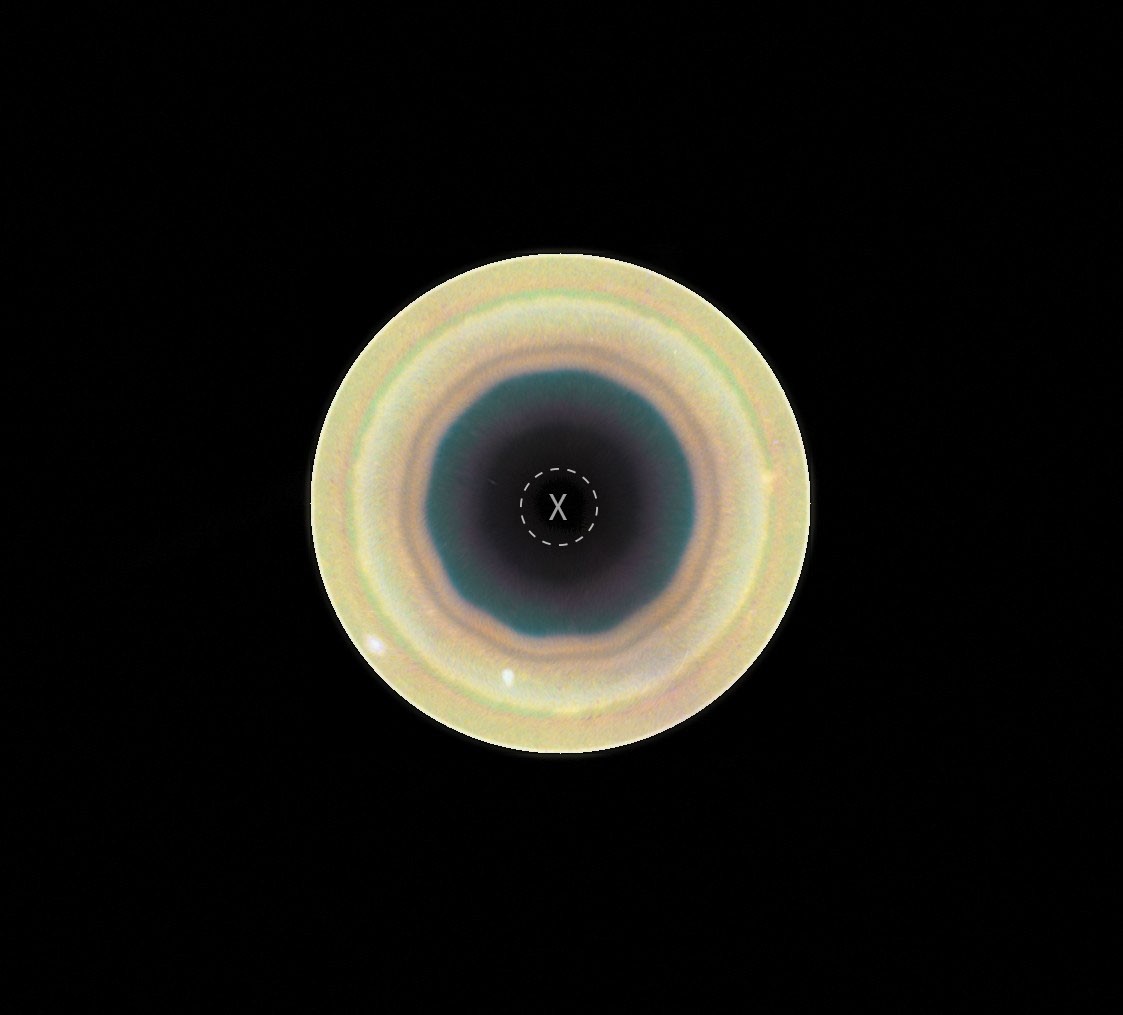
Why are Saturn’s poles geometric? Saturn’s North Pole has been known to be surrounded by a hexagonal (6 sides) cloud since discovery in 1987 in data taken by NASA’s Voyager spacecr...

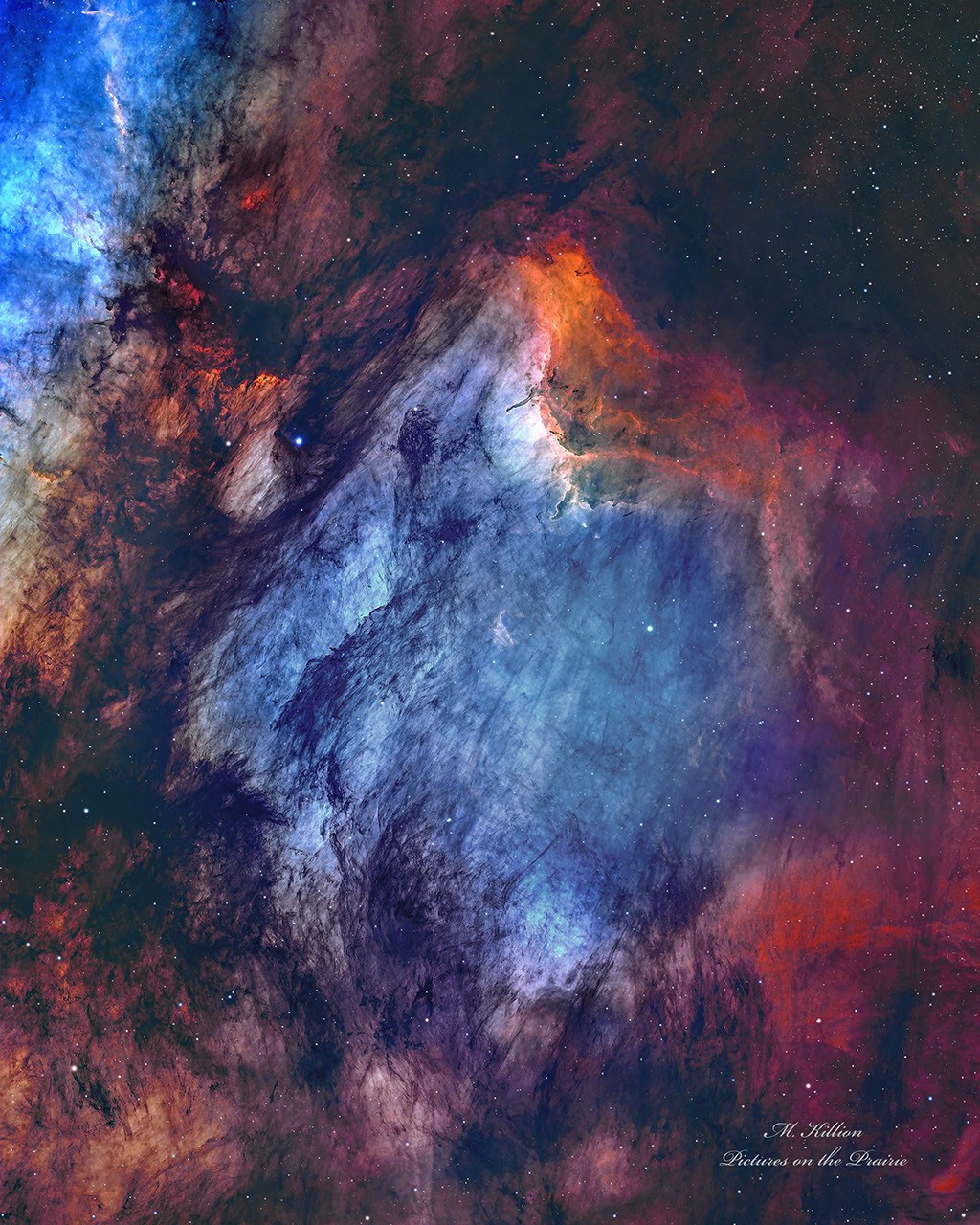
The Pelican Nebula is slowly being transformed. IC 5070 (an official designation) is divided from the larger North America Nebula by a molecular cloud filled with dark dust. The ...

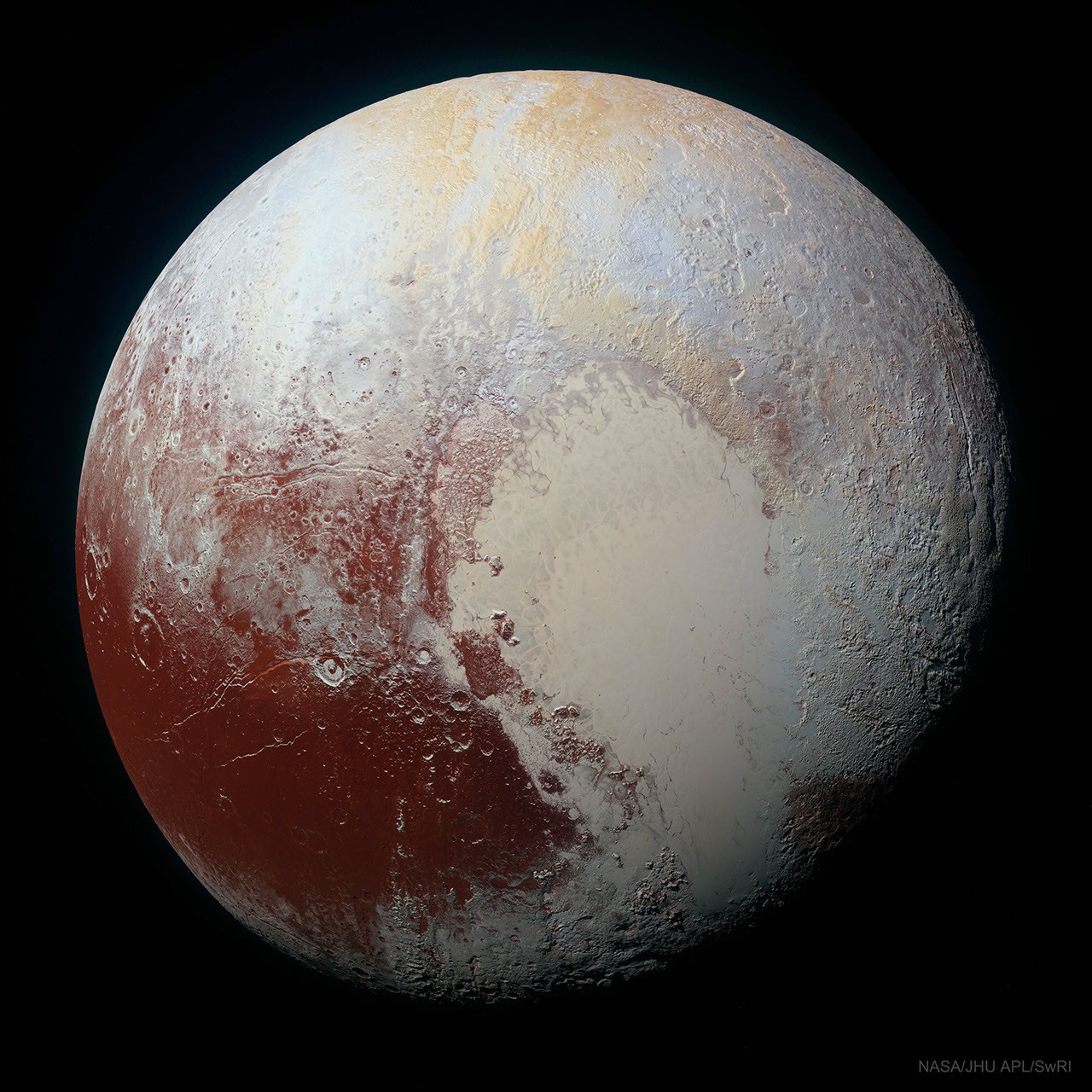
Pluto is more colorful than we can see. Color data and high-resolution images of our Solar System's most famous dwarf planet, taken by the robotic New Horizons spacecraft during it...

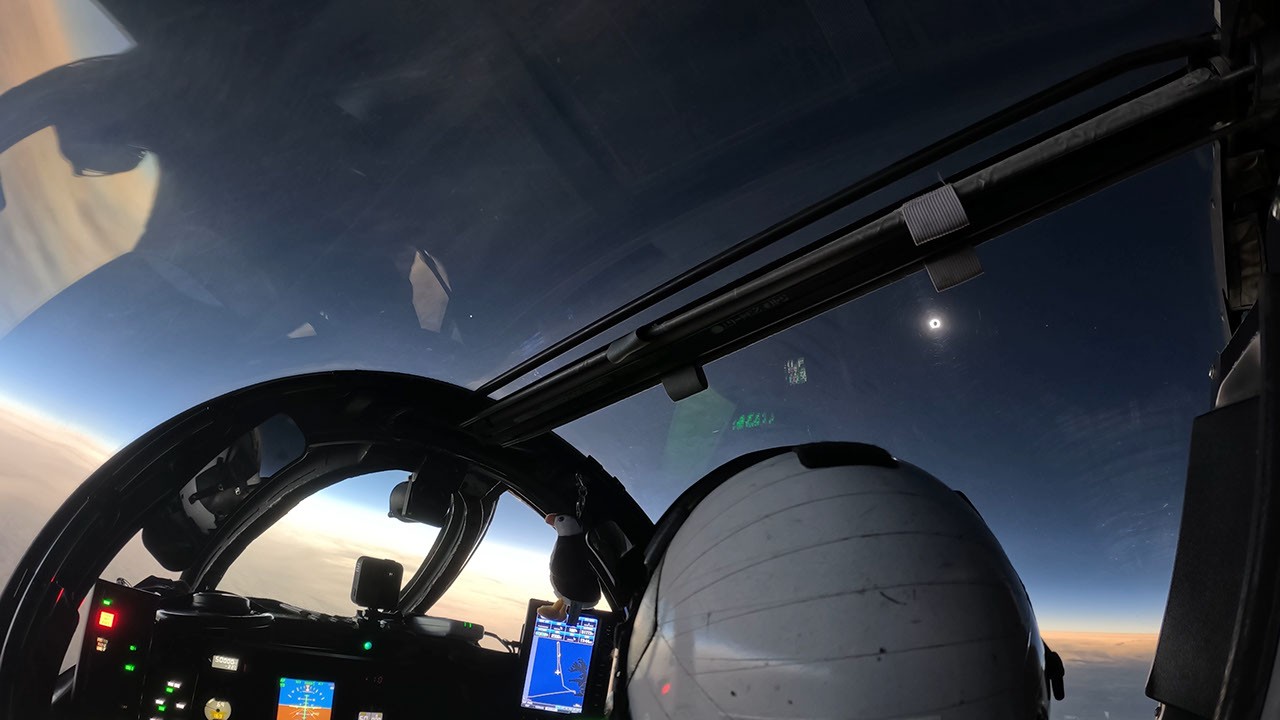
Chasing the shadow of a New Moon, NASA’s WB-57F high altitude research aircraft took to the skies off the coast of Iceland on August 12 to observe a total solar eclipse. At 50,000 ...

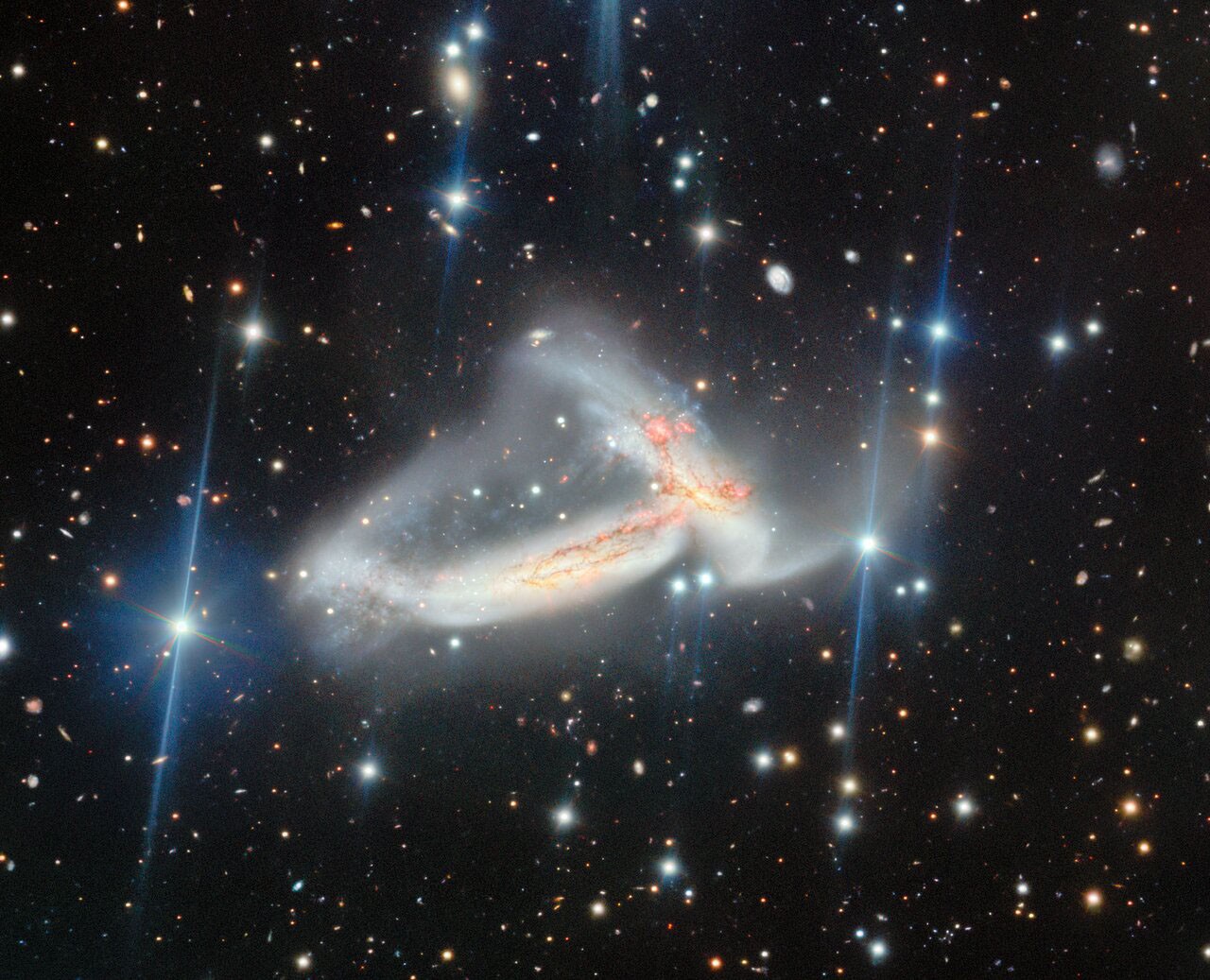
Nā ʻUhane Māhoe Huki Pū i ke Ola, is the Hawaiian name given to this image of a pair of spiral galaxies locked in a mutual gravitational embrace. Some 200 million light-years dista...

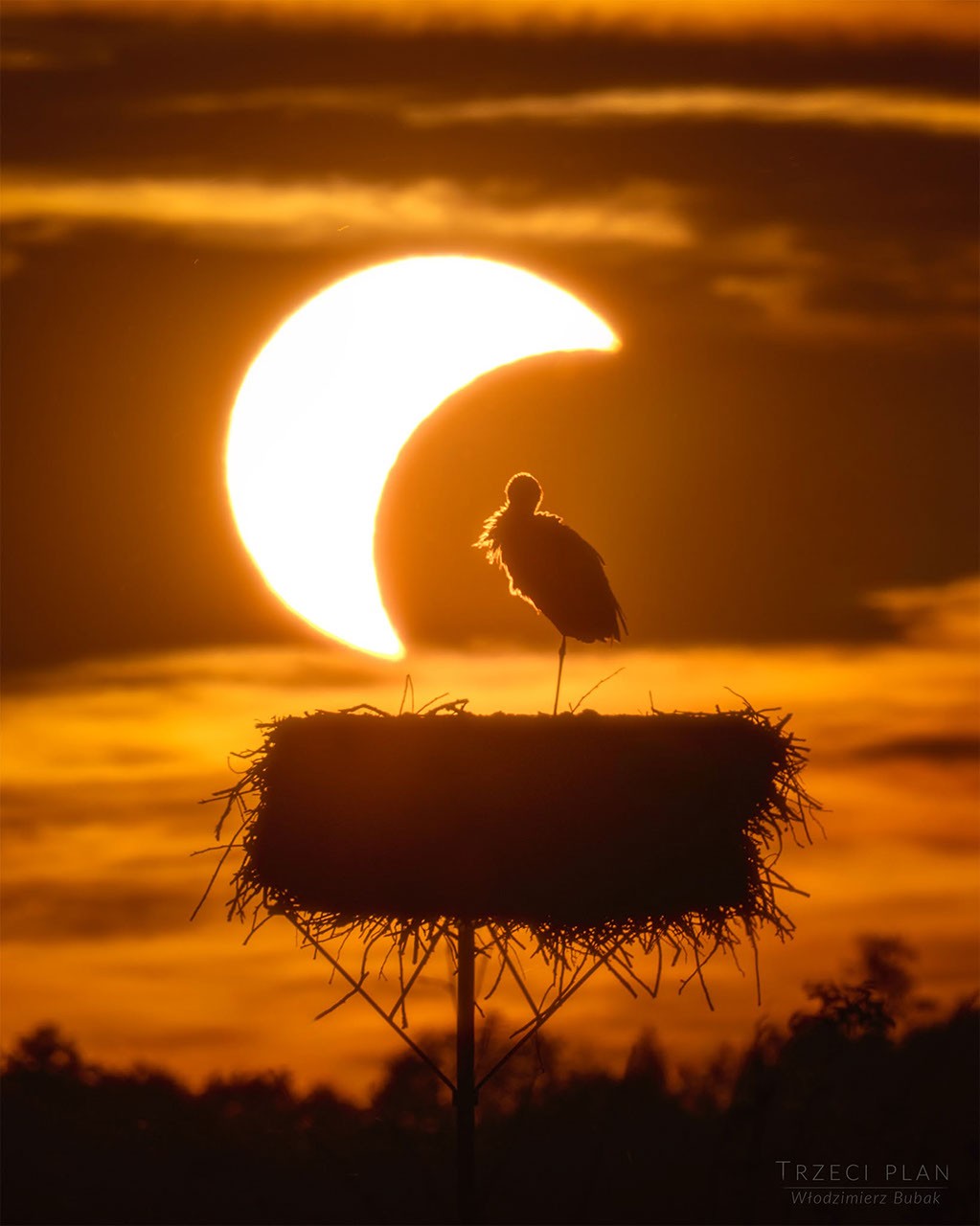
How do animals react to a total solar eclipse? The featured image shows a stork roosting on her nest in Poland at a partial phase of the recent total solar eclipse. If you are ...

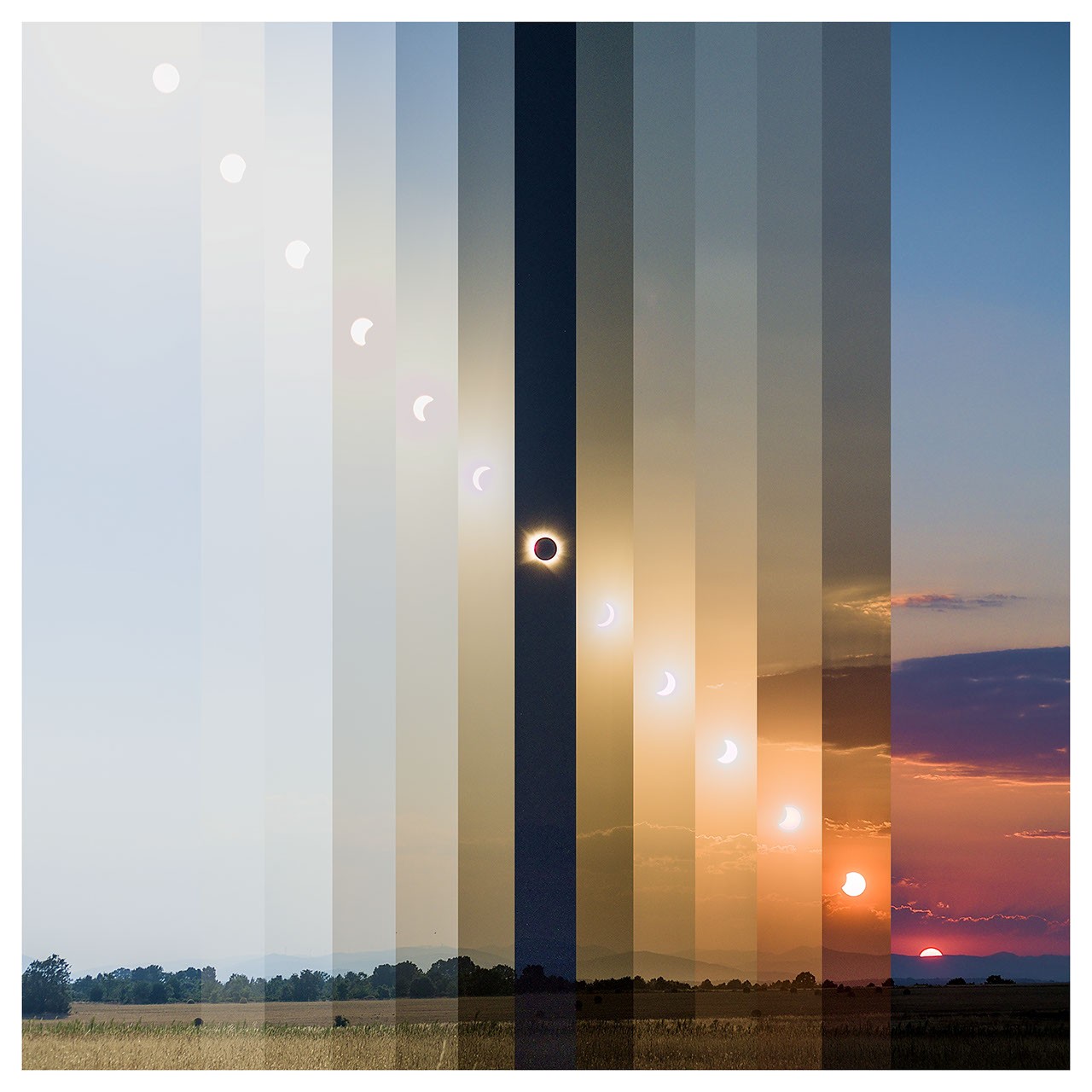
Pretend you have never heard of a solar eclipse. The Sun’s behavior has been predictable your whole life. One day, you witness the sky transform as it does in today’s spliced image...

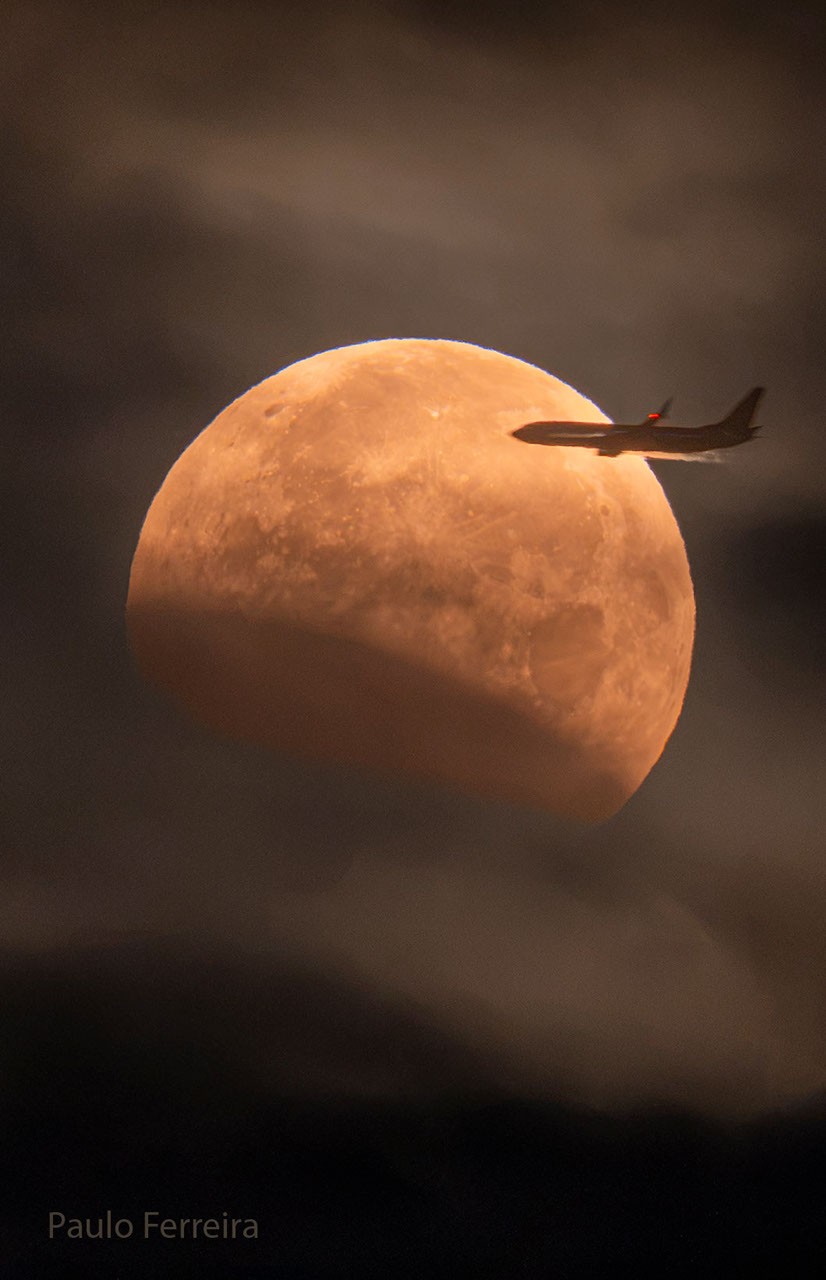
Did you need to be on the right side of this airplane to see this eclipse? No. Lunar eclipses are routinely seen from the half of the Earth facing the Moon when the eclipse occurs...

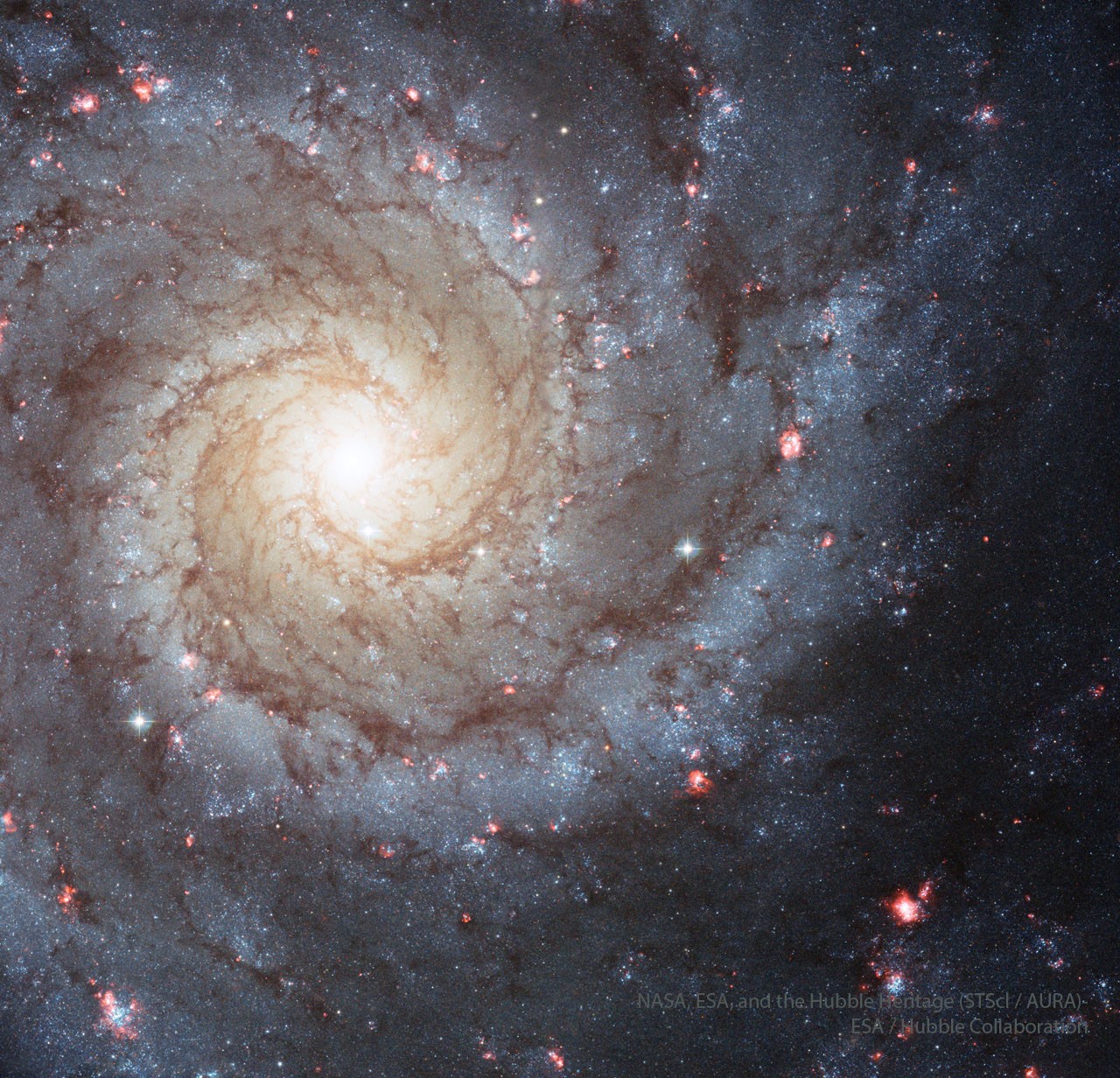
If not the most grand, then this spiral galaxy is at least one of the most photogenic. An island universe of about 100 billion stars, 32 million light-years away toward the conste...

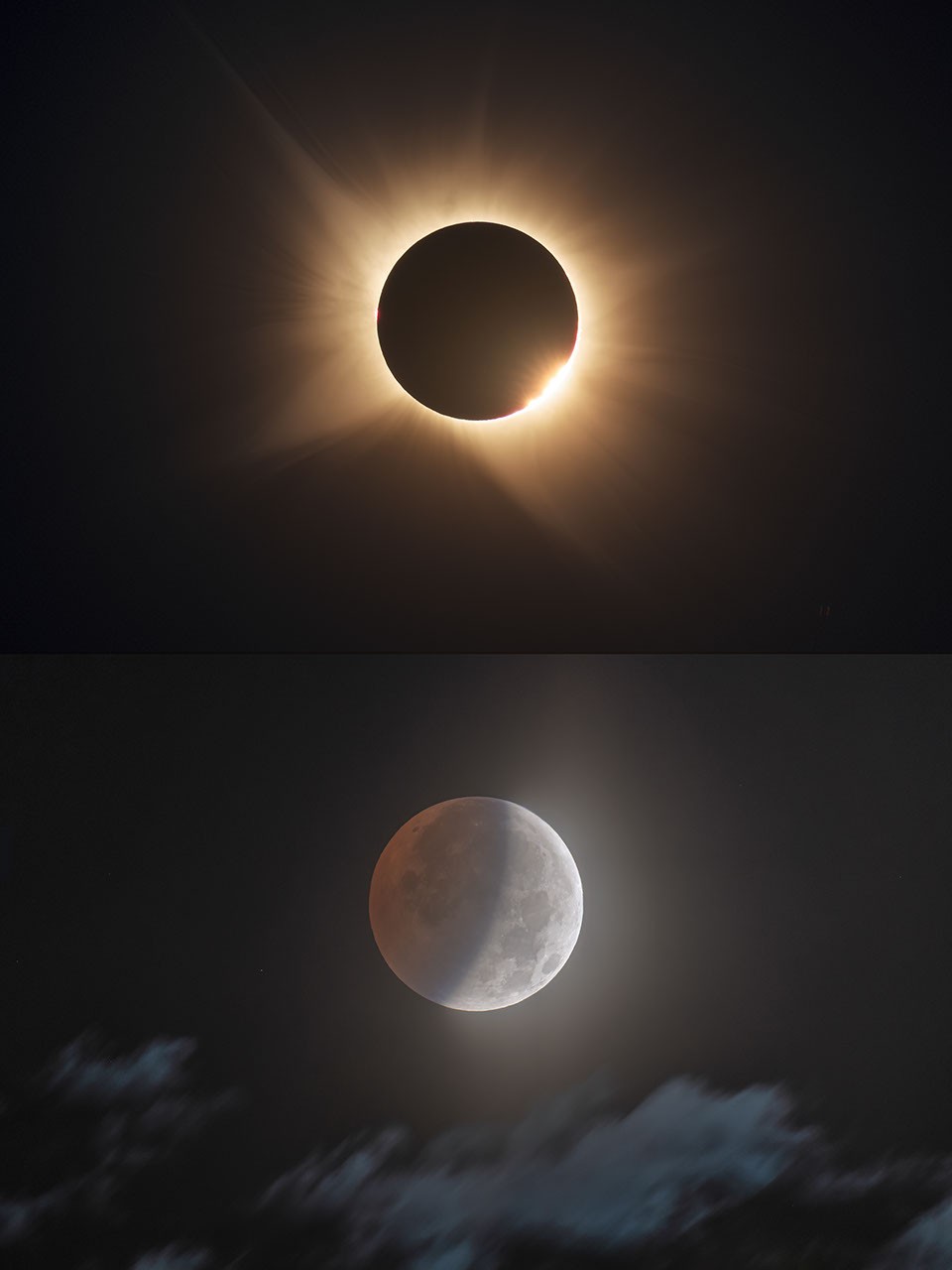
clipses tend to come in pairs. Twice a year, during an eclipse season that lasts about 34 days, Sun, Moon, and Earth can nearly align. Then the new and full phases of the Moon, sep...

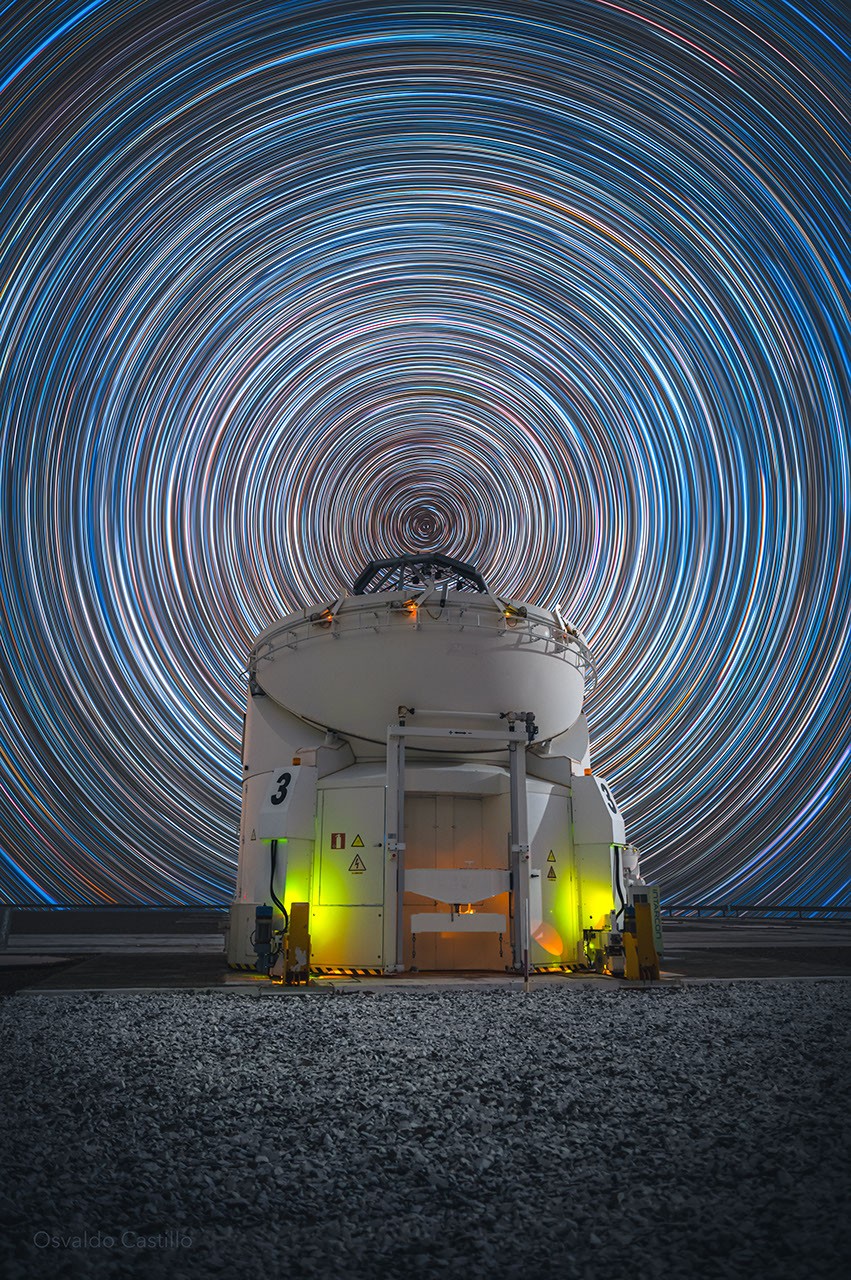
At the latitude of ESO's Paranal Observatory in Chile, about 25 degrees south, Earth's rotation moves the planet's surface eastward at over 1,500 kilometers per hour. And while tha...

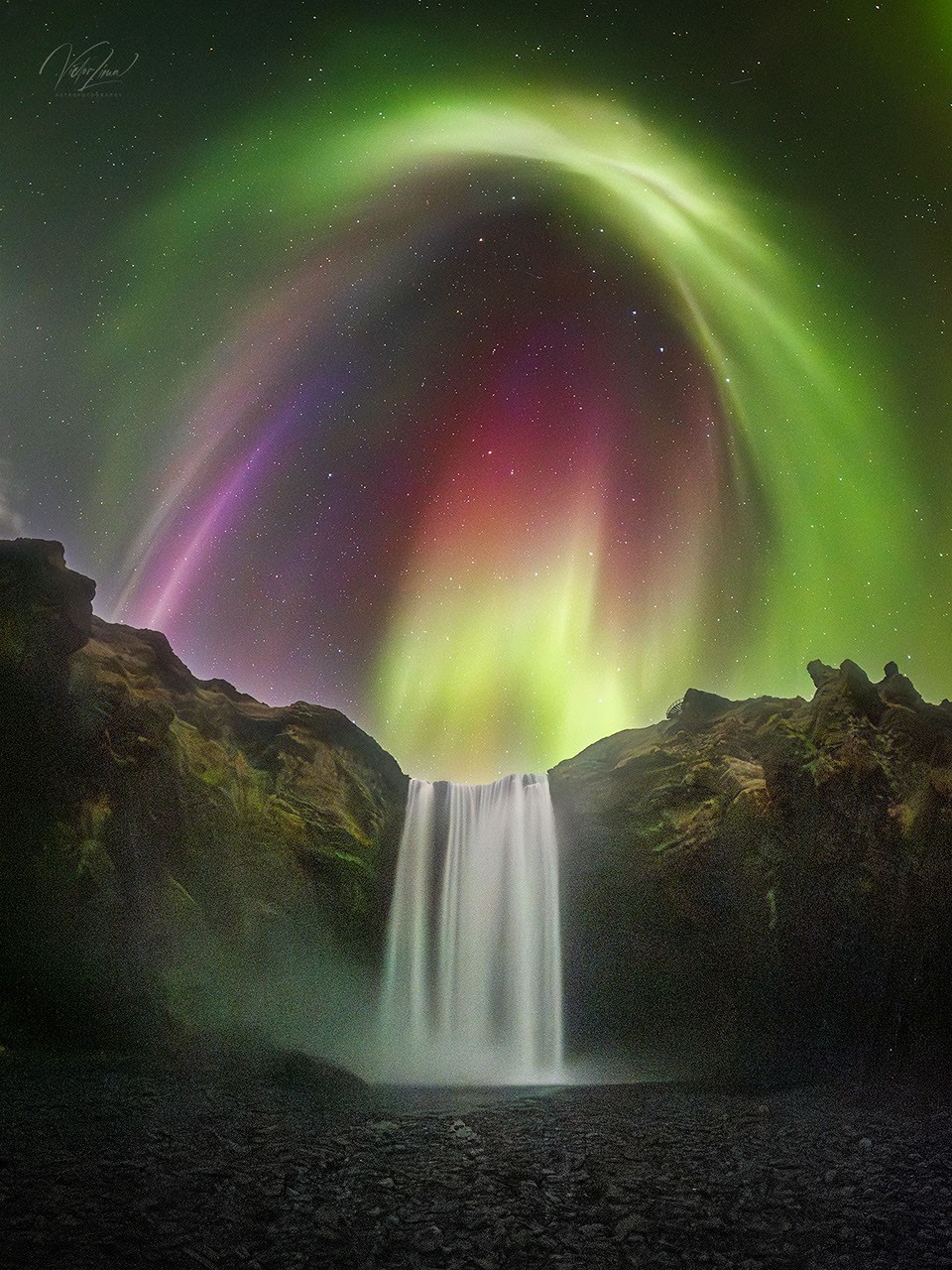
What a sight to behold, when a night sky became filled with colors that appeared to rain over the Skógafoss waterfall in Iceland. This image was taken in a single 5 second expo...

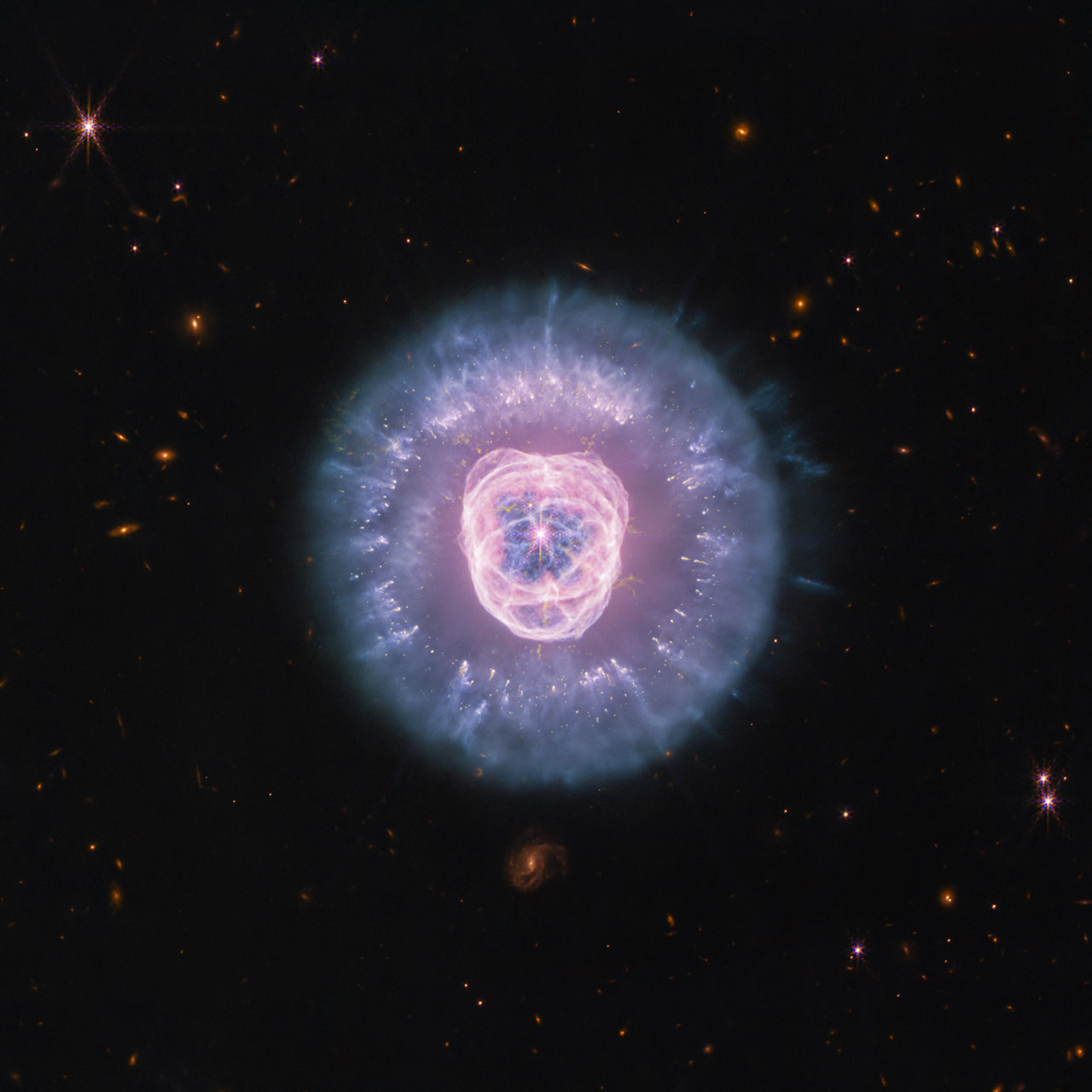
Are we looking at the future of our Sun? The James Webb Space Telescope captured today’s composite image of the Lion’s Head Nebula (NGC 2392) with its NIRCam and MIRI instruments. ...

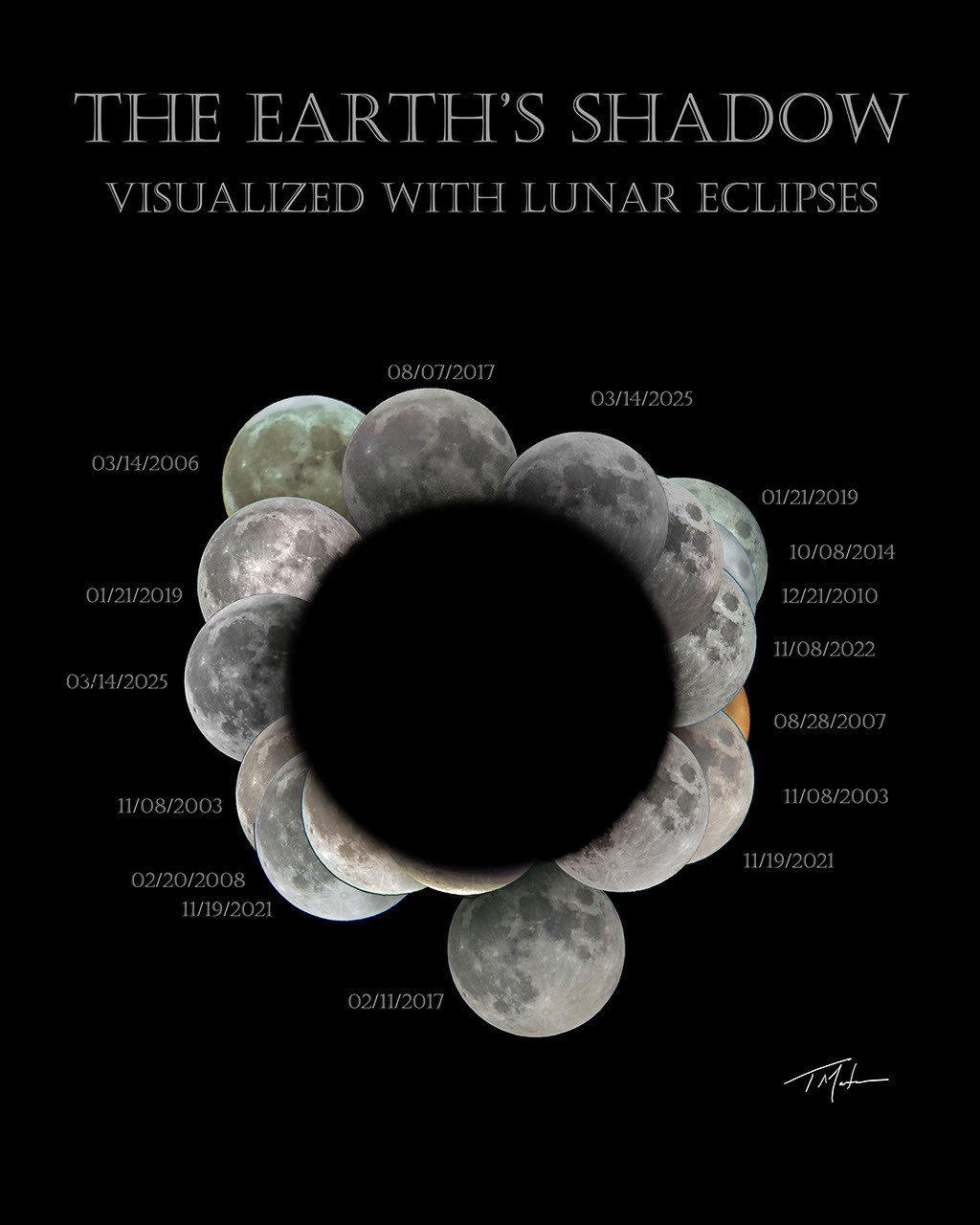
What’s creating this giant hole in space? This is not a black hole — it’s a shadow. It’s Earth’s shadow. Since at least the time of Aristotle, people have noted that Earth's dark...